

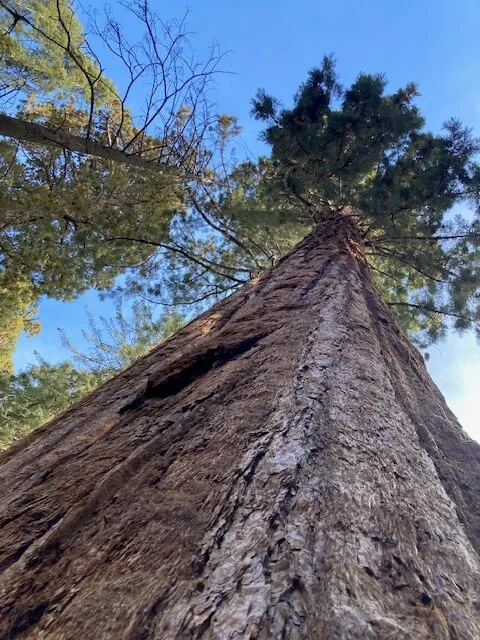
Wow! I mean WOW! The trees in Sequoia and Kings Canyon Natiional Parks are incredible! The sheer volume of the individual sequoia trees, with the majestic heights and incredible girth, drew me to the parks, yet I was less prepared than I expected. I didn’t realize that sequoia trees are larger in volume than redwoods, though coastal redwoods grow taller.
Sequoia National Park was established as the nation’s second National Park in 1890, largely due to naturalists and conservationists like John Muir. They were upset by the wholesale logging of the sequoias and other trees throughout the Sierra Nevada and fought to preserve them.
It is good they did! The west flank of the Sierra Nevada in California is the only region in the world where the sequoia trees grow. There are 75 distinct groves in that region between 5,000 and 7,000 feet in elevation. Any higher and the temperatures are too cold. Any lower and the ground is too dry. They need gentle terrain with moist, not wet, soil to flourish.
A week after Sequoia was established, the amount of protected lands tripled with the addition of Grant Grove National park, which is now part of Kings Canyon, which was established in 1940. The two parks now encompass more than 1,300 square miles, with more than 93 percent of that land designated as wilderness land. With more than 826 miles of hiking trails, there is more to the parks than trees. They contain one of the deepest canyons in North America, some of the most remote wilderness in the lower 48 states, and the highest mountain in the contiguous United States – Mount Whitney at 14,494 feet.
Driving into the park, I followed a river into the mountains, with determined water cascading over boulders and rocks. I stayed in a hotel right outside the park entrance, and I could hear the water as I stepped outside in the morning. It was wonderful! The mountain vistas, and views, both driving into the park and inside the two parks were phenomenal! Awe-inspiring! Massive! There was some white knuckle driving for me, but it was well worth it!
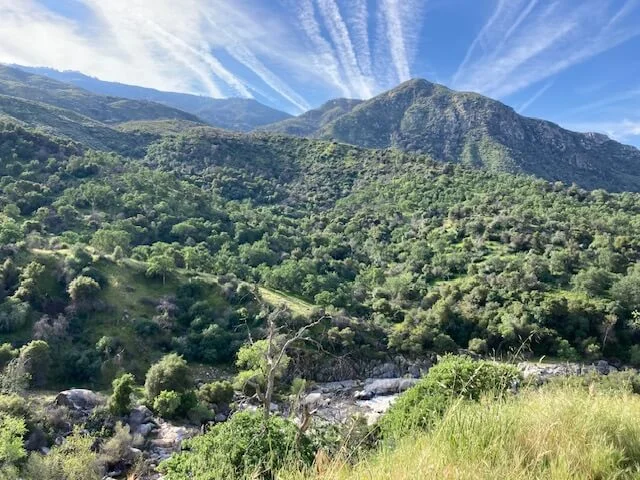
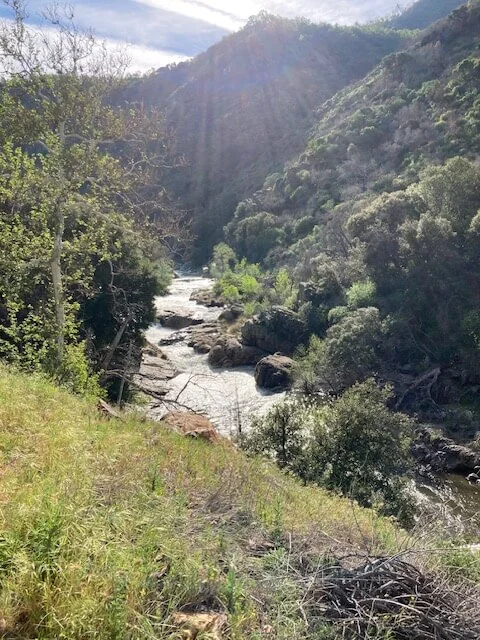
The Generals Highway traverses the mountains and connects both parks. I was lucky! It opened the day I got there, though many parts of both parks were still inaccessible.
Wildlife is abundant, especially birds. At one point, a turkey stepped out in the road right in front of my car and walked across the road as if it was the most natural thing in the world. A car, who cares? On my hikes, I saw squirrels with bushy tails longer than their bodies, robins, deer, black and white birds that I think were woodpeckers, a mallard pair at Lake Hume and these beautiful birds with the body and shape of the blue jays i grew up with in Minnesota, though their colors were different. They had a navy blue body with a dark brown head. I later learned they are Steller’s jays.
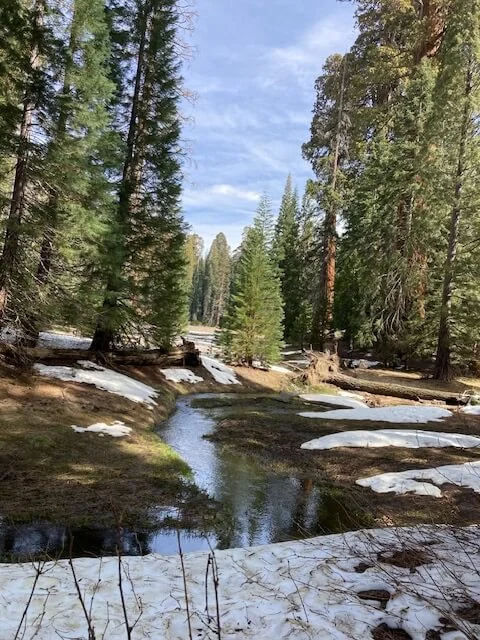
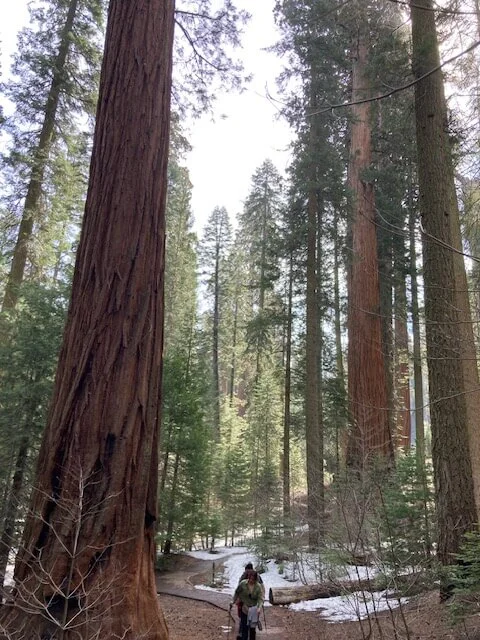
One of my favorite hikes was the trail skirting around the Round Meadow, one of the best sequoia habitats in the Giant Forest. Parts of the trail were still snow covered, and the meadow was beautiful!
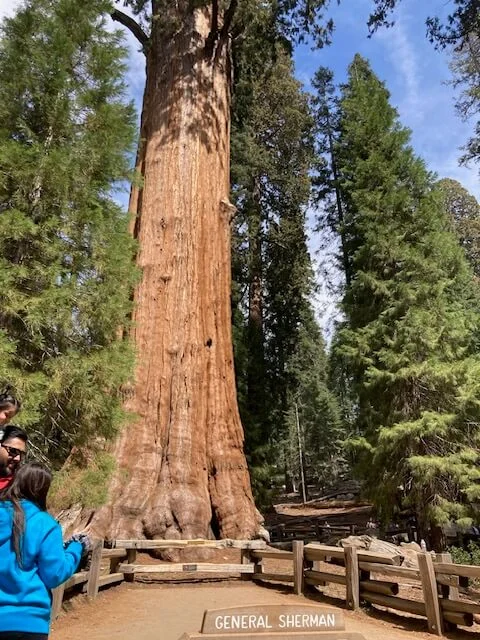
Now to the biggest trees: Both the Sequoia and Kings Canyon parks have generals, the largest trees in the individual park .General Sherman is located in the Sequoia National Park, and though it is not the tallest or widest, its overall volume makes it the biggest tree on Earth. It stands 275 feet tall and the circumference at its base is 103 feet. The tree is over 2,000 years old.
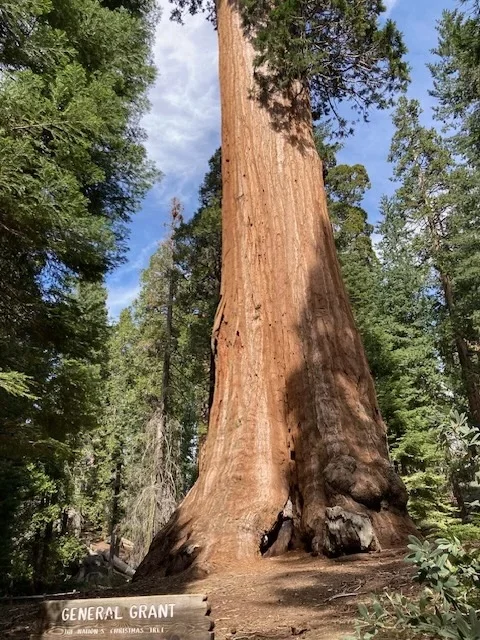
General Grant stands 268 feet high and is in Kings Canyon National Park. Its massive volume makes it the third largest tree in the world, and its base’s 40 foot diameter makes it the widest known sequoia in the world. At 1,700 years old, it is 1,500 years younger than the oldest known sequoia.
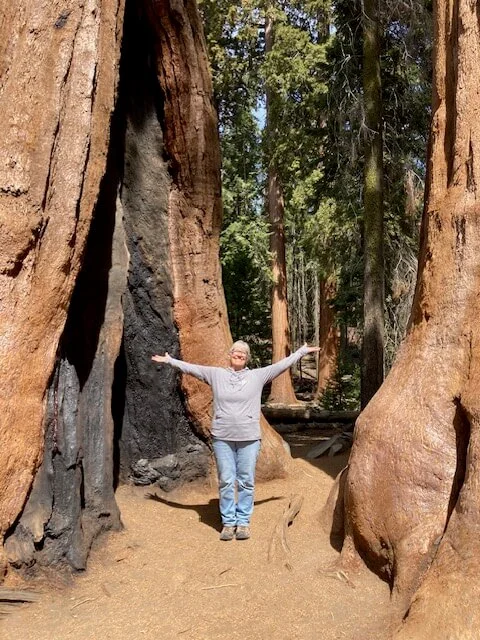
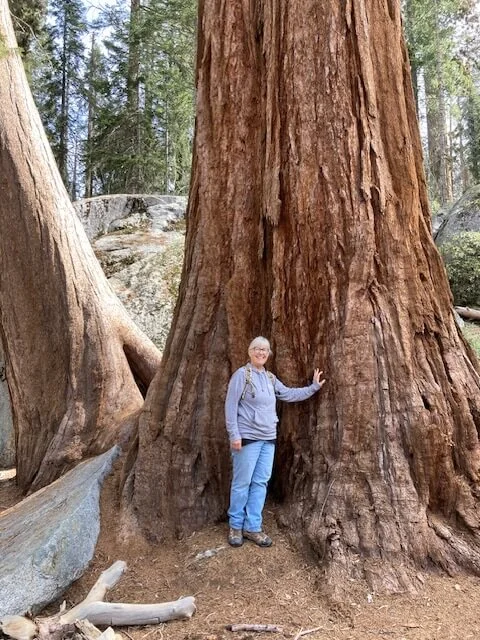
I’m really glad I spent a day there. I learned so much, and I finally was able to stand next to these giants!
A fun little side note: On one of my hikes, I stopped to watch a curious bee that was riding the breeze, hovering to watch me for a long time. Who would have thought?!