
Did you know the National Park Service manages more than 430 sites? Those include National Parks, National Monuments, National Historical Sites, National Historic Parks, National Seashores, National Lakeshores, National Scenic Rivers/Trails, etc. I had decided years ago that I was going to visit most, if not all, of the National Parks and pretty much dismissed the rest. Well, I have to tell you, since I have been on this journey, I have learned a lot! Nearly half of the 63 National Parks were first protected as National Monuments, including the Grand Canyon National Park, which was first declared a National Monument in 1908 under the Antiquities Act of 1906.
Why does all this matter? This journey I am on has taken me to many places that are not on the list of the 63 parks, and sometimes, the other sites are better than some of the parks! Case in point: I had decided to head back to Minnesota to take care of a few things (which turned out to be a God thing, a subject for another time). While driving through Arizona, a brown sign on the side of the highway stated “Walnut Canyon National Monument” indicating it was just a few miles off the highway at the next exit.
My thought: “No big deal. It’s only a few miles off the highway. I’ll go check it out.” Boy was I wrong! I’m so glad I could be spontaneous and see the “no big deal” National Monument! It really is a BIG DEAL!
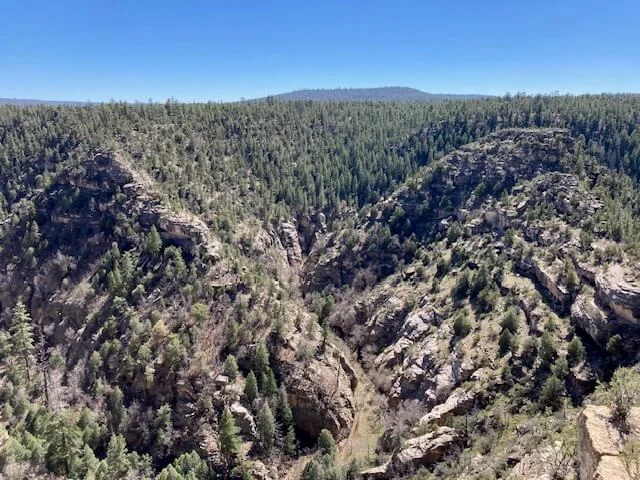
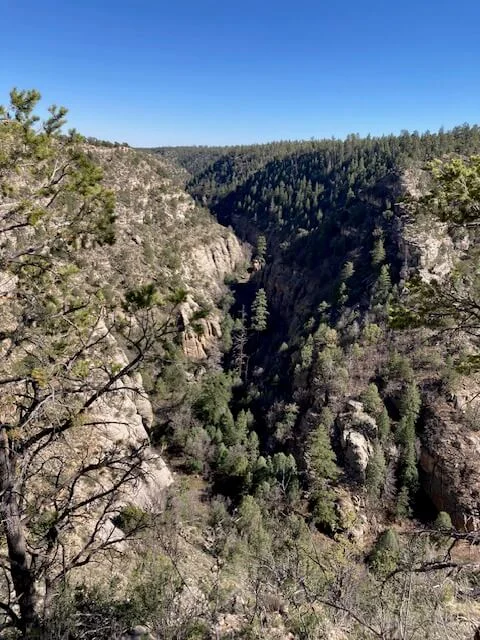
The .7-mile canyon rim trail is at 6,690-feet elevation, and the canyon floor is 350 feet lower, down steep walls. There is an island in the middle of the canyon with a .9-mile trail about half way down accessible to visitors. With the elevation differences, the biodiversity is incredible. Plants and animals from mountain and desert environments are living nearly side by side.
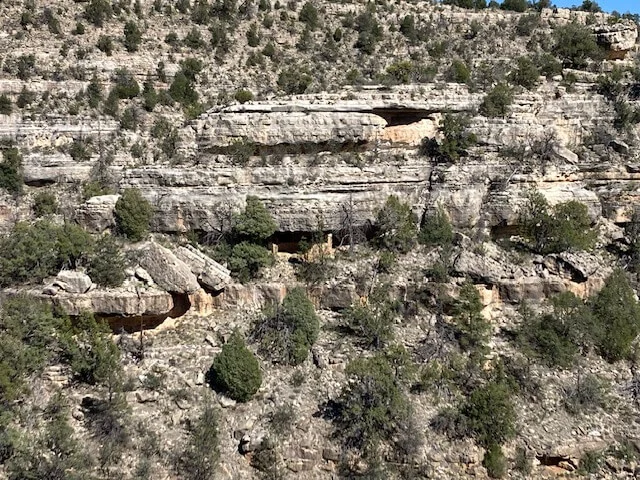
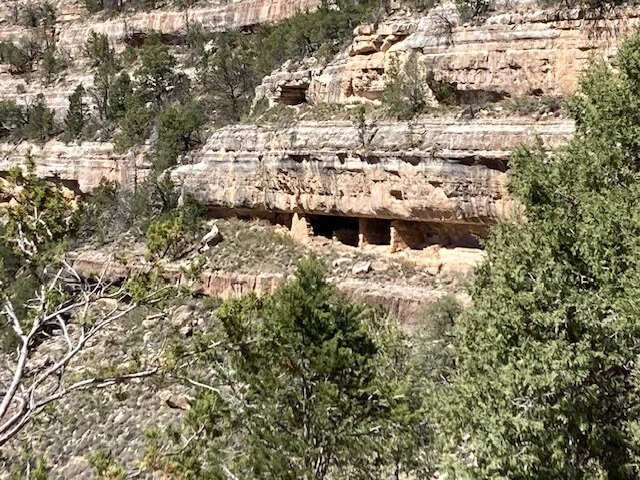
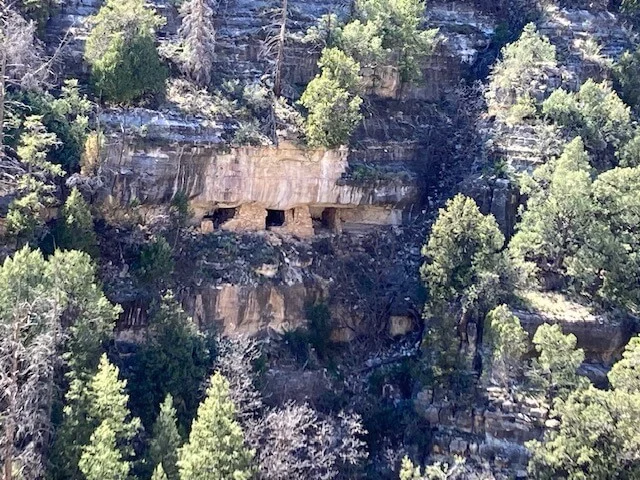
To get to the island trail, visitors descend 273 stairs into the canyon, about 185 feet. By the time you have completed the trail and made it back up to the visitor center, you will have traversed 736 stairs. The trail itself is easy, but the number of stairs is grueling, and it is worth it. I was able to get close and personal to 25 cliff dwellings around the trail, and there are signs that give the history, or identify some of the plants.
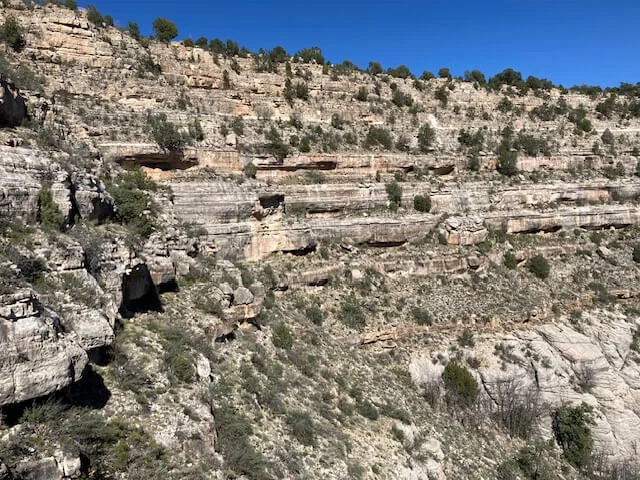
What made this canyon so exciting for me is the history with the cliff dwellings in the canyon walls. Based on archeological evidence, the first permanent dwellings were actually on the rim, and by 1100 CE permanent structures were in canyon itself. As recently as 1200 CE families lived in the canyon and farmed the rim. More than 300 dwellings were constructed in the natural cliff alcoves where silty limestone eroded away leaving limestone overhangs and ledges. Archeologists believe the women built the homes, constructing walls by cementing limestone rocks together with a gold-colored clay found in deposits in the canyon. The walls were then plastered both inside and outside with the same clay, and the doors and windows were reinforced with wooden beams.
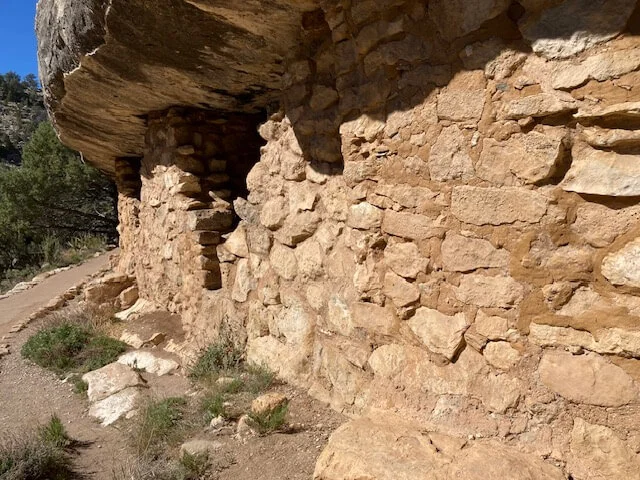
The farming community flourished between 1125 and 1250 in the Sinagua tradition. Sinagua is Spanish for “without water”. The water source was the Walnut Creek at the canyon floor., and it is believed they hoarded water in jugs in the dwellings for the dry seasons.
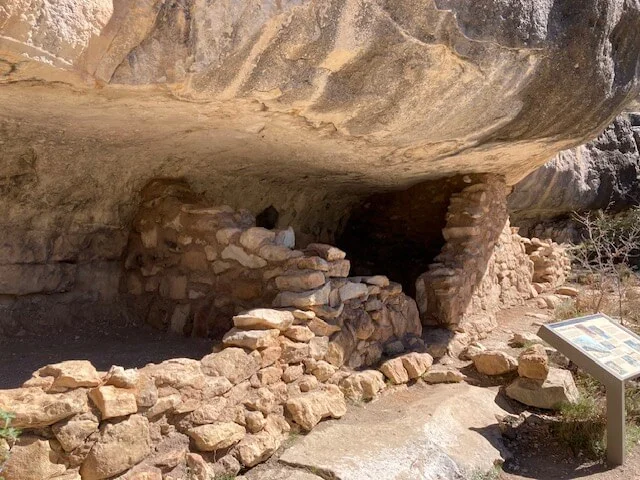
There is no record for why the people moved on, but it is believed they moved to new villages a few miles southeast and eventually assimilated into the Hopi culture. There could be many reasons why they left – drought, environmental stressors, resource depletion – or, as in the Hopi tradition, the canyon could have been one stop in a longer journey. The people did not give up the responsibility to care for their ancestral village and those left behind. Some sites are still visited by descendants, prayers are still offered, and plants are still ritually gathered.
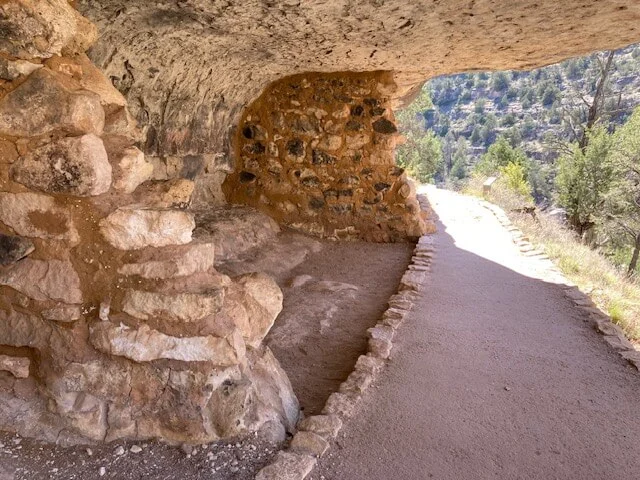
A lot of the artifacts left when they moved on were lost to souvenir hunters in the 1880s. The railroad brought the hunters in, and the practice of taking souvenirs was promoted. Some of the cliff dwelling walls were dynamited to allow in more light for the looters, though it wasn’t considered looting at the time.
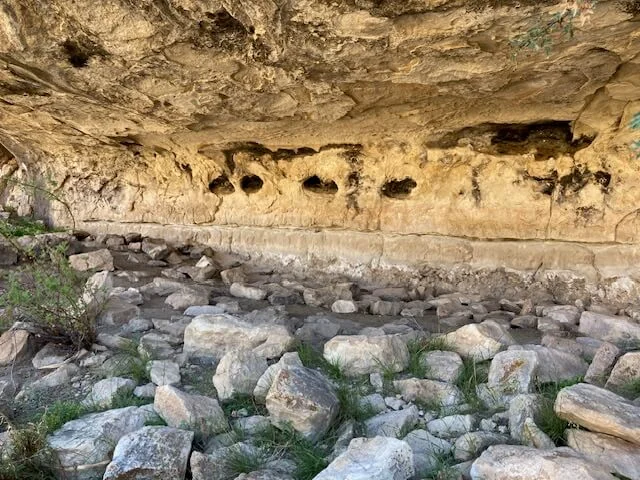
Isn’t it interesting how things change? I mean, there is a part of me that gets excited at the prospect of treasure hunting, of collecting souvenirs linking us to the past, and yet I am appalled that so much history evaporated. Back then it was promoted and acceptable, and now, it’s appalling…
Anyway, the theft and destruction alarmed local citizens which led to the 1915 establishment of Walnut Canyon National Monument. The National Forest Service managed the 3,600-acre site until it was transferred to the National Park Service in 1934.
I am so grateful I had this spontaneous diversion to see the canyon, and to get a glimpse of what living there was like thousands of years ago. All because I saw a brown sign!