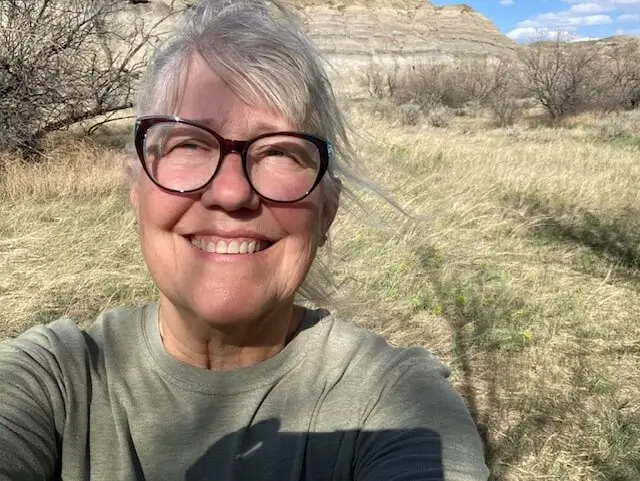
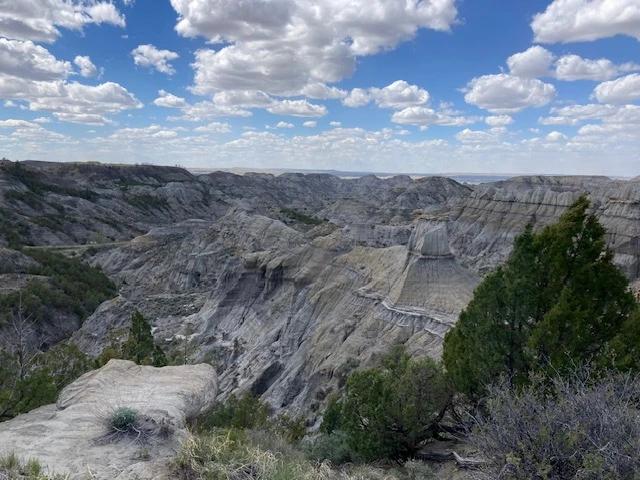
It is interesting what we can find when we keep our eyes and ears open! My intention was to search for Yellowstone moss agates along the Yellowstone River, which is something I have wanted to do for years, and I found the 11,538-acre Makoshika State Park in Glendive, Montana.
Leaving North Dakota after spending a day inside because of heavy winds that left the air hazy with topsoil and dirt, I traveled to Glendive, one of the places with public access to the Yellowstone River. I spent hours the next morning along the river searching for agates. You would think I covered a large area, but I kept studying all the gorgeous stones. I don’t think I found agates, but my bucket got heavy with rocks I picked up because they are beautiful. I’ll try to identify them all later. You know, once I start rockhounding, it becomes addictive! I searched more along the Yellowstone River in Billings, Montana, and while hiking on BLM land. Now, I’m looking for rocks where ever I go!
Anyway, someone mentioned that the Makoshika State Park, which is the largest state park in Montana, would be a good place to hike. I headed there that afternoon, and boy was she right! The park features pine and juniper studded badland formations and many fossil remains, including those of a Tyrannosaurus Rex, Triceratops, and other prehistoric life. Spending my time on the hiking paths, I didn’t study the dinosaur fossils, but I understand a researcher rode a horse through the Makoshika badlands in 1889 and recorded 500 triceratops skulls, and more than 10 species of dinosaurs have been found in the park. The triceratops skull in the park visitor center was found by paleontologists in 1990-1991. That discovery was the motivation to construct the visitor center.
The park itself was declared a state park in 1953, but part of the land was donated by Catherine McCarty in 1939. She donated a quarter section of land and her homestead cabin to Dawson County as a goodwill gesture to start the process. Before becoming a state park, the land was offered to the federal government as a National Park. After punching a road into the badlands and assessing the area, the National Park Service ultimately declined the offer.
It is interesting that there are badlands in so many places in the U.S., and each one is different. Over the last nine months, I have seen them in several states in the southwest and in the midwest, and they are still gorgeous to me. Though they are gorgeous, I can’t help wondering how people survived living in them. This park has Paleo Indian artifacts up to 12,000 years old.
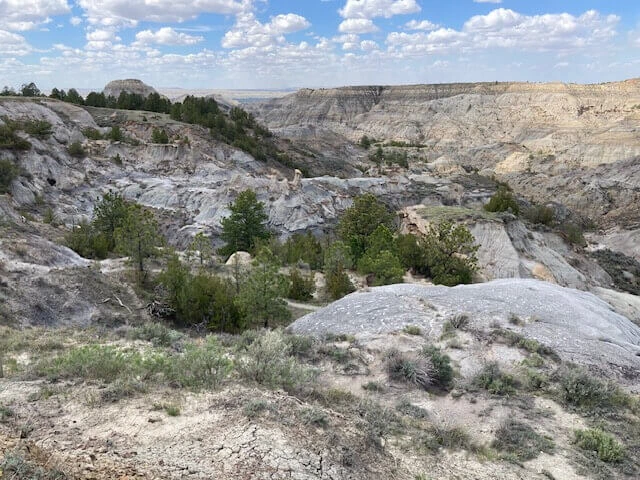
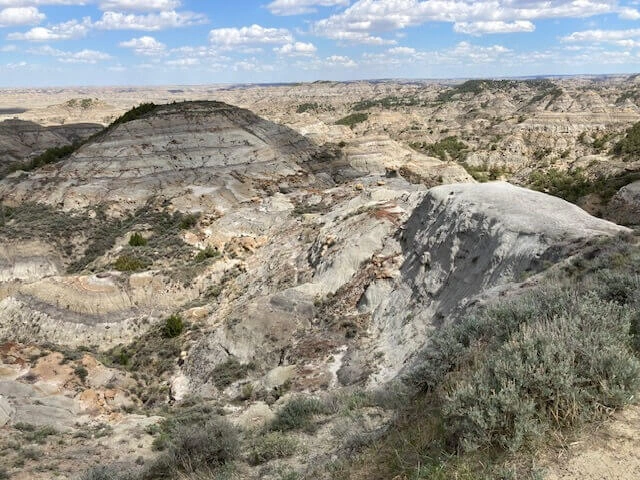
My first objective was to drive the road through the park to the end, and hike some short trails as I made my way back to the entrance. The hike out to the “Twin Sisters” at the end of the road was incredible! The vistas, as well as being close to the formations, was humbling.
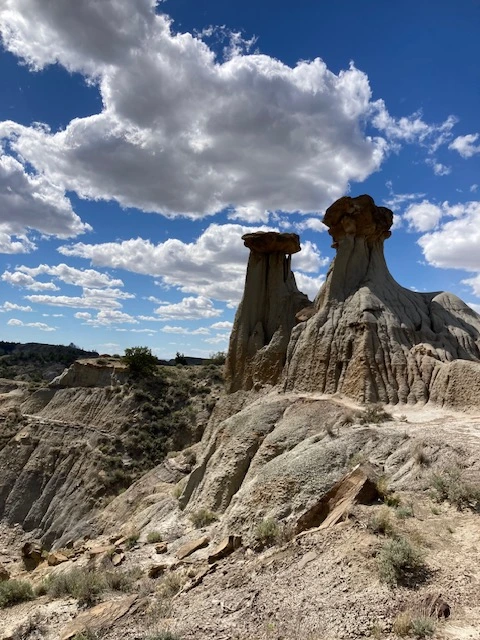
Twin Sisters
My coordination isn’t always the best, especially in high winds. I did pretty well, stopping and stabilizing myself every now and again. The winds were not as bad as the day before, but they were still gusty up on the top areas.
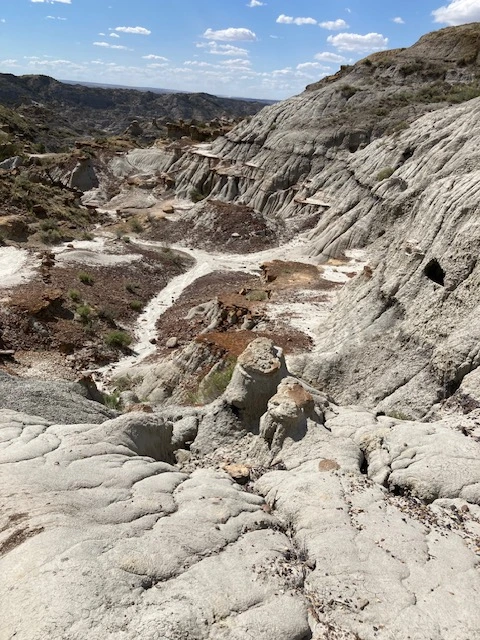
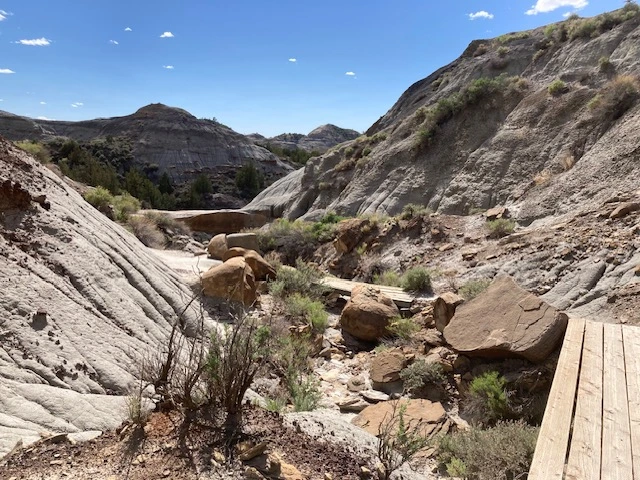
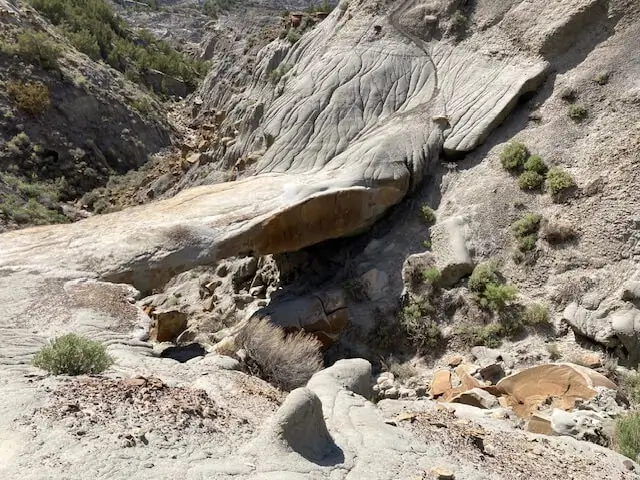
One of the trails to a natural bridge descends to an interesting formation, snakes around the side of another formation, descends into a high elevation canyon and then climbs up to the top before circling back to the bridge, the canyon, the formation and then climbing back up to the top. There was a spot in the canyon where the narrow trail had collapsed, making the crossing a little challenging. I’m so glad I chose this hike! Though challenging, the variety of terrain, and the views, were such a privilege. I will admit all the up and down was a struggle at times, especially when crossing formations that looked like liquid frosting flowing over the stone making it difficult to see the footholds.
Near the visitor center, there is a path that goes through a meadow around the lower parts of the formations and lower cliffs. Though I was tired from the rockhounding and hiking higher up in the park, I had to check it out. It I called the “Bluebird Trail,” and it was well worth it. I didn’t hike all the way to the formations, but the meadow was intoxicating, and the bird sounds music.