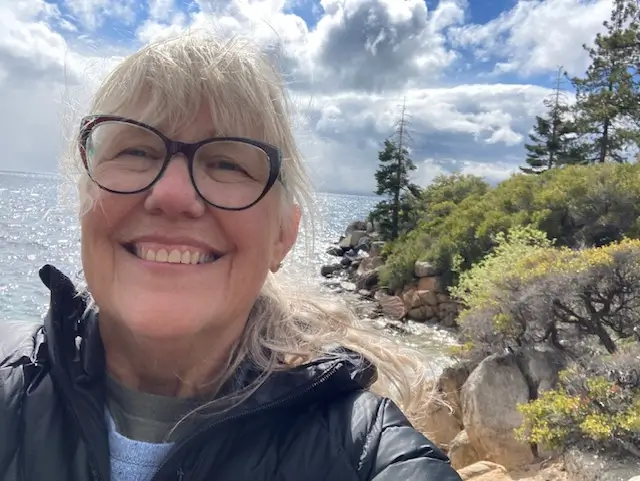

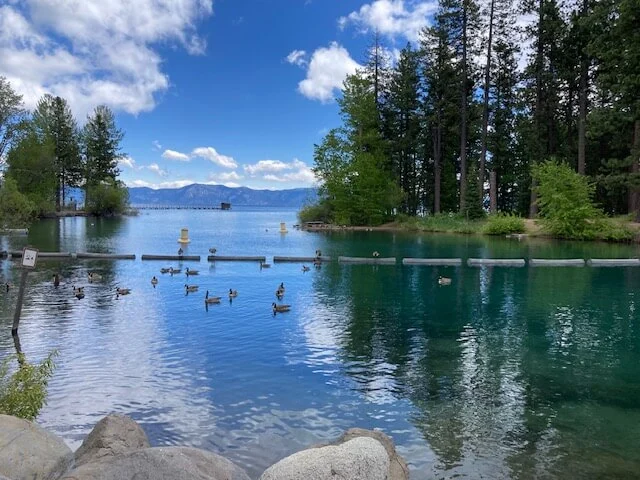
As I was growing up I often heard mention of Lake Tahoe, whether it was in movies or from people vacationing. The beauty was touted by many, and there seemed to be a draw to the area. That stuck with me, and then I had the opportunity to pass through the area on a bus on the way home from a West Coast wedding when I was 19. My mind took a photograph of one view that stuck there, pulling me back to investigate.
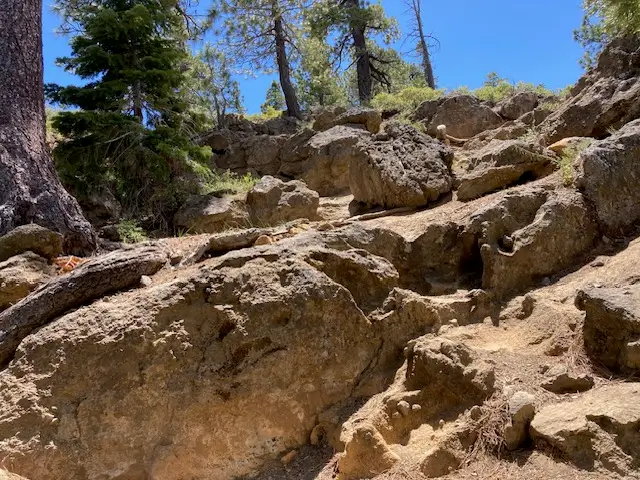
Wow! All these years later, the area is different than I imagined, yet just as beautiful. Starting in Tahoe City, I drove the road circling the entire lake, stopping to hike up a cliff, walk on the beach, or just to take in the gorgeous views, accompanied by a sky alternating between sunny, cloudy and rainy. My first stop past the visitor center was Eagle Rock. Hiking up the side of the cliff, through the woods, over boulders and the rocky cap provided an astonishing view of the lake, putting its magnitude in perspective.
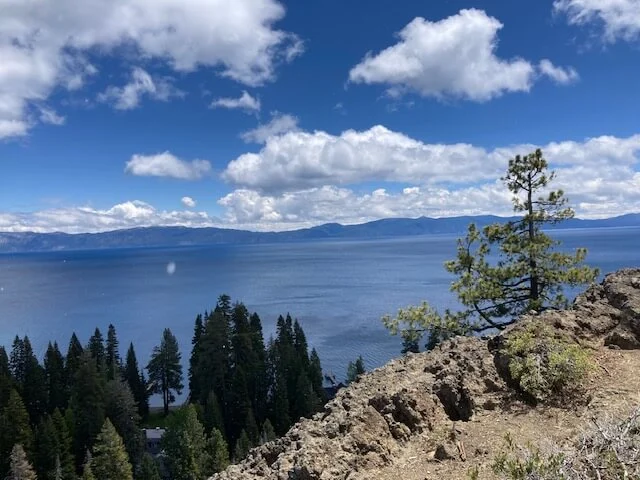
The Tahoe Basin was actually formed long before the lake itself when tectonic faulting dropped the valley between two parallel faults as the mountains rose on either side. This 191-square-mile lake was formed roughly 2 million years ago when lava flowing from Mount Pluto on the north shore formed a dam across the basin’s outlet. Now instead of flowing through the valley, water from rivers and streams flowed into the basin, gradually filling it up.
Located at an elevation of more than 6,000 feet, Lake Tahoe is the largest Alpine lake in North America. It is 1,645 feet deep, which makes it the second deepest lake in America, next to Oregon’s Crater Lake.
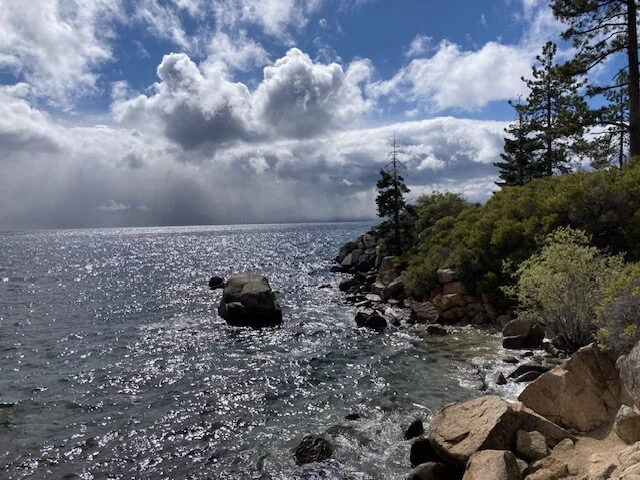
The Washoe Tribe have lived in the area for thousands of years for spiritual renewal and sustenance, though the lake was officially mapped by John C. Fremont in 1844. Through errors in his calculations, one-third of the lake is in Nevada, and 2/3 of the lake is in California.
Things changed around the lake during the Gold Rush in California and the Silver Rush in Nevada. The dense pine and fir forest around it were heavily logged for timber for mine shafts and settlements popping up around the mines. It wasn’t until the 20th Century that the area started shifting to tourism, which created fears of destruction of the lake’s clarity. The Tahoe Regional Planning Agency was formed in 1969, and today conservation and environmental groups work together to protect the ecosystem.
The number of developed areas around the lake shore surprised me. I guess I was expecting more natural areas, but what I did see was awe-inspiring. And the variety of lake shore ecosystems was really interesting.
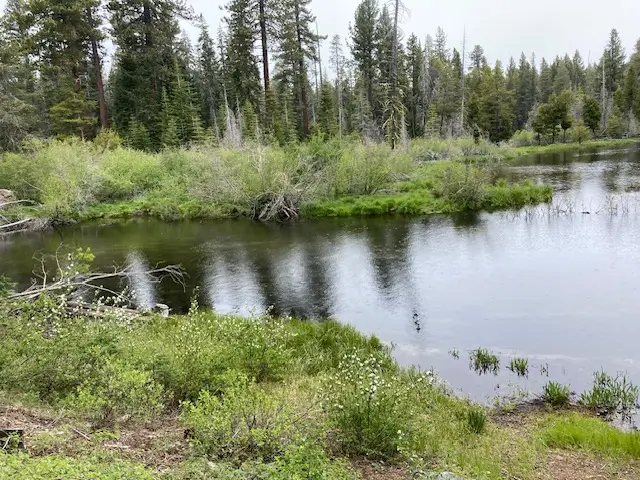
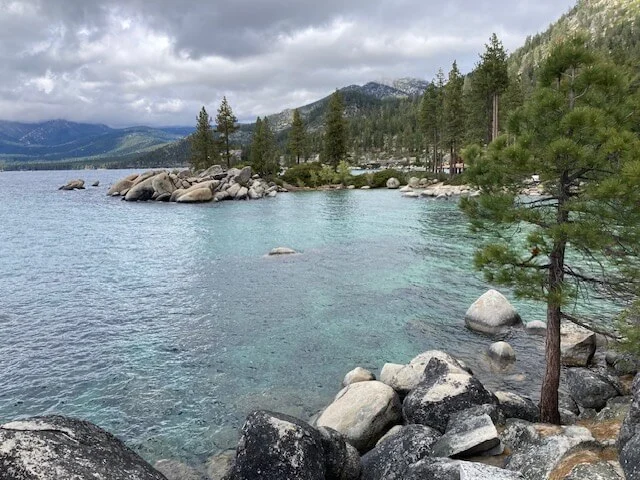
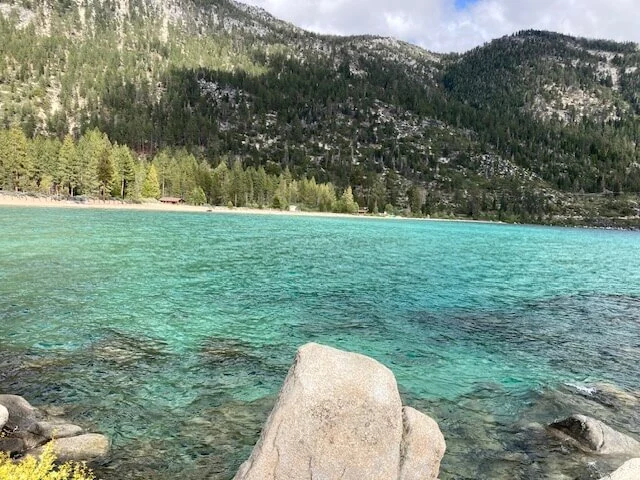
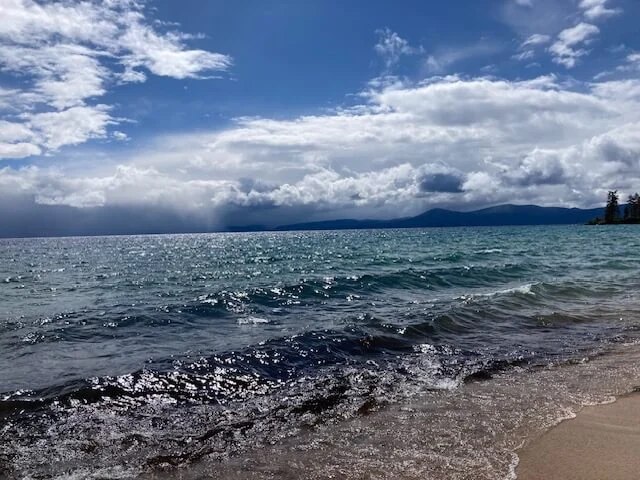
Though cold, and sometimes wet, the day was well spent!