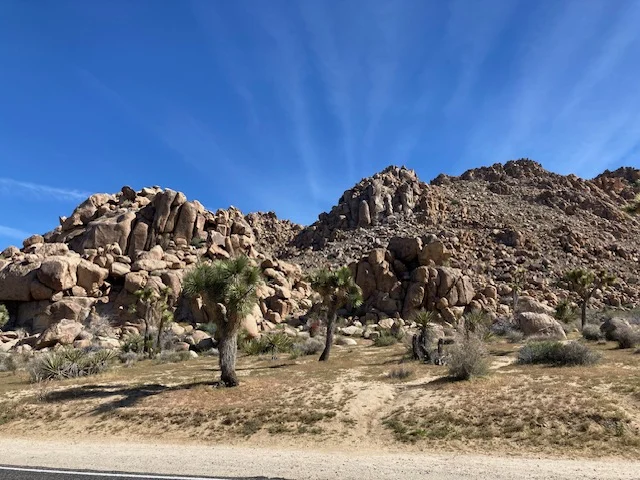
I’m not exactly sure what I was expecting to see when I entered Joshua Tree National Park, but it was way beyond my expectations! With elevations from 536 to 5,814 feet there are two distinct desert ecosystems contained in its 794,000 acres. The western half of the park is in the higher cooler Mojave Desert, which is the home to the Joshua Trees, and the eastern half is in the lower Colorado Desert, which is home to the creosote and cholla cactus. The park also is filled with intriguing unique rock formations.
Entering the park through the west entrance, I headed to the visitor center to get the Joshua Tree National Park token (surprise!) and a map of the park. It was a little extra driving but well worth it, with so many of the stops and hikes clustered in the northern half of the park. The Park Ranger was helpful in suggesting which stops were important stops, the level of the different 191 miles of hikes, and which areas were closed for restoration.
Inhabited by humans for at least 10,000 years the park started as a National Monument, boasting about 825,000 acres by 1936. In 1950, the size was reduced to 265,000 acres, but the need to protect the unique historical and geological area drew it into National Park status in 1994 with 794,000 acres protected.
During the December 2018 government shutdown, leaving the park open without staffing helped foster irrepairable damage in the park, including visitors cutting down mature Joshua trees to create new roads, and off roading in sensitive areas. Damage was done again during the October 2025 government shutdown when a fire broke out scorching 72 acres of the densest forest of Joshua trees in the park. The estimates of damaged trees ranges between hundreds to more than 1,000, and there is a conflict within the information I found regarding how the fire started. Initially, it was blamed on a lightning strike near the campground, but later anonymous reports from a firefighter state the fire started from someone at the campground lighting toilet paper on fire. Either way, the lack of adequate park personnel removed the ability to educate park visitors on fire safety, Joshua tree life cycles, and the sensitive environment. Joshua trees growth is slow. After a brief spurt shortly after seed germination, they gain only 1/2 inch to 3 inches per year, taking about 50 to 60 years to mature.
The tallest Joshua trees in the park are over 40 feet tall, and the lifespan of a tree is about 150 years, though it may live longer. The exact age of a Joshua tree is hard to determine because the trunks do not have rings like deciduous trees. The age of an individual tree is estimated by height and looking at growth rates.
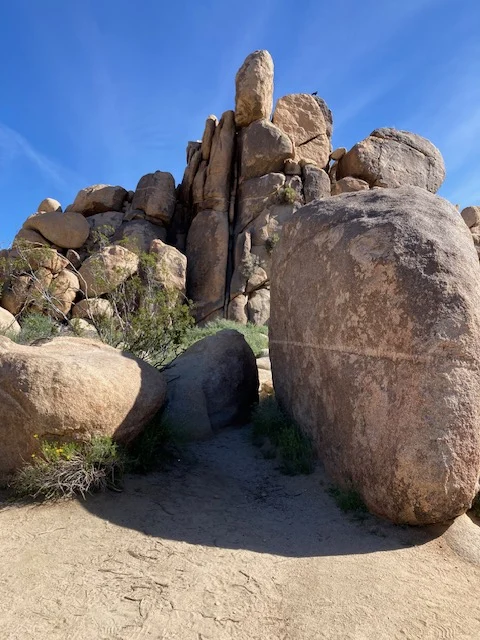
The unique rock formations also bring rock climbers to the park. At the picnic area at Quail Springs I had the opportunity to watch a group of rock climbers, some in ascent and some in descent. I haven’t been that close to climbers before, and not being a climber myself, it was really interesting to learn how they used the carabiners and anchors, plus their insight on which areas are safe as footholds or handholds.
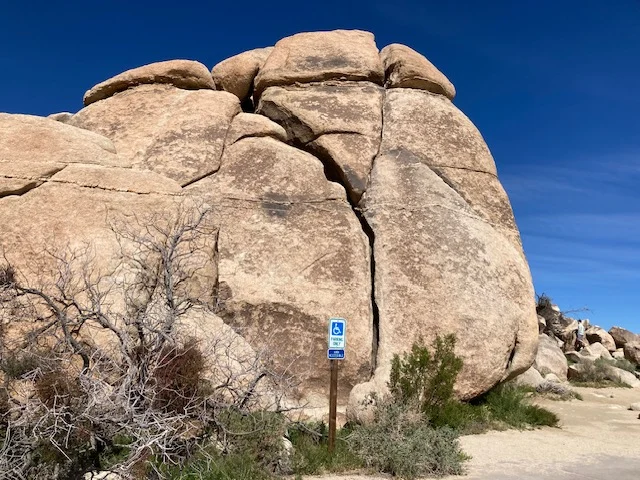
Climbers were using the other side of this rock formation. (I didn’t feel comfortable photographing strangers climbing.)
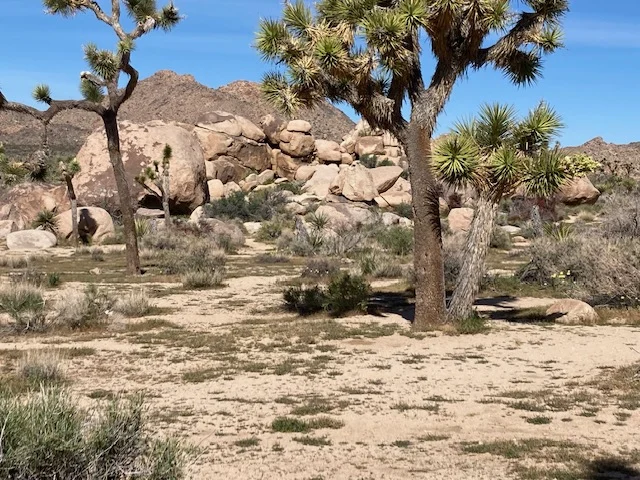
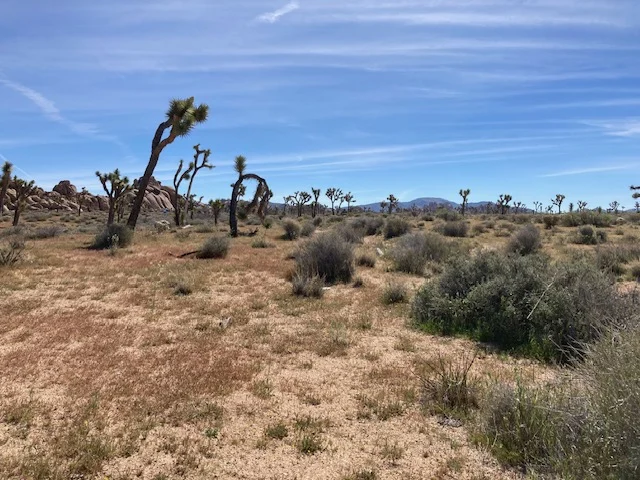
The Joshua trees on the hike toward the spring.
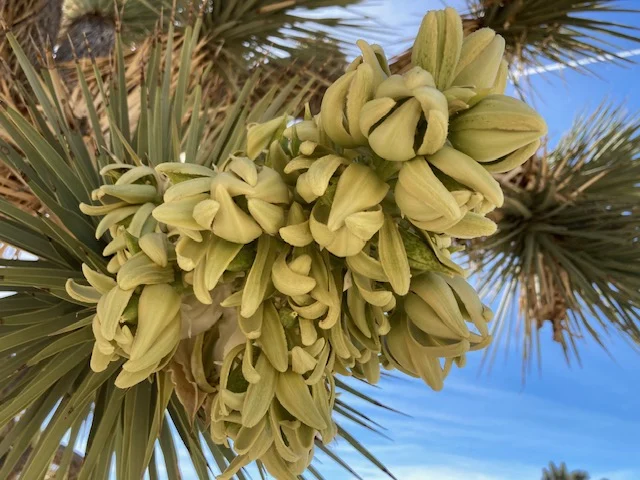
Joshua tree blossom
An intriguing place to visit is the “Hidden Valley”, though I got distracted, veered off the 93 miles of paved roads, and drove down a long gravel road where I found a hidden valley I hiked all alone. It was like finding a hidden treasure! The shoe prints in the wash showed that lots of people had visited at one time or another, but the day I was there, no one joined me. The hike was ineffable! So much green lined the wash, a stark difference to areas I had already visited, and colorful flowers were more abundant.
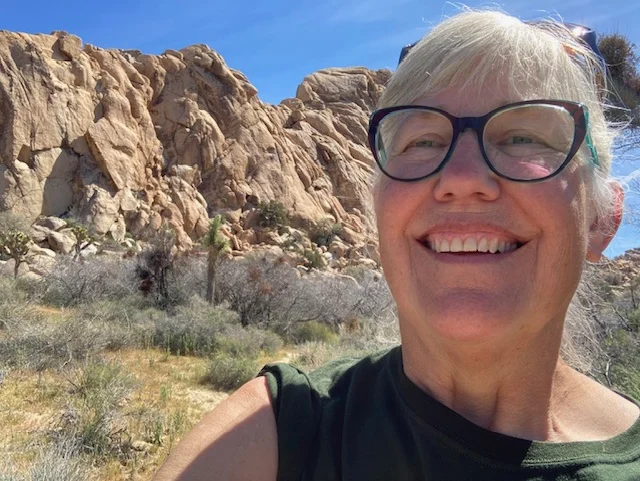
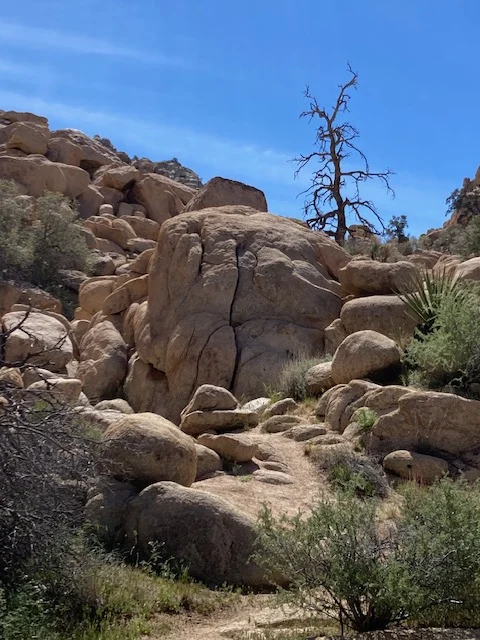
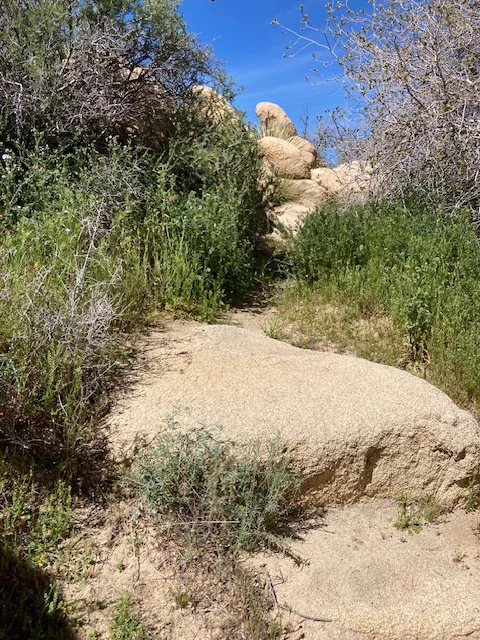
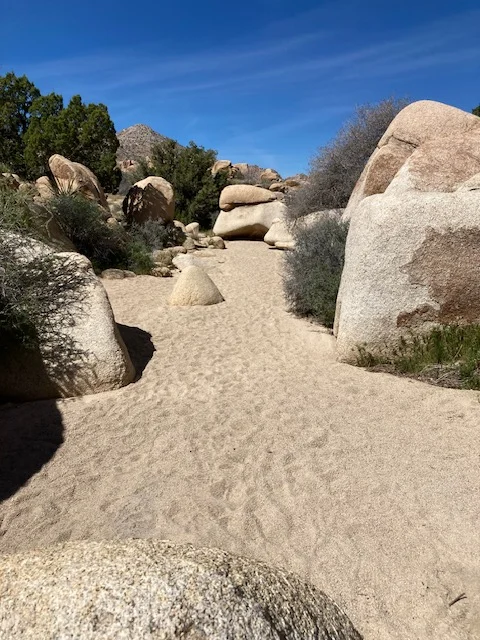
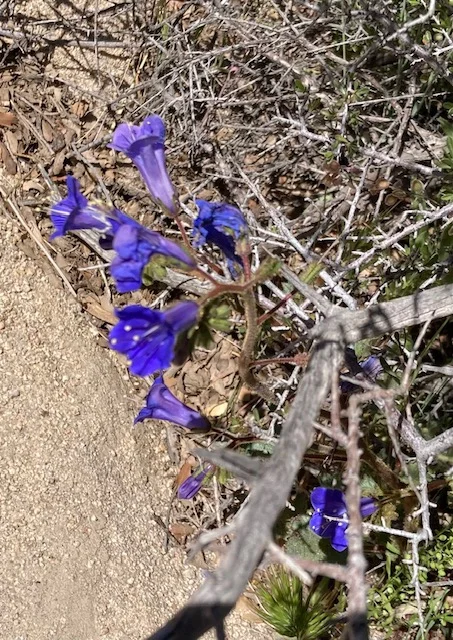
Standing in the wash, stopping to breathe in the clean warm air, sprouted gratitude in my soul for the opportunity to be there.
I did drive to, and hike, the actual “Hidden Valley”, with its wonderful walls of unique rock formations, yucca plants, trees and blossoms.
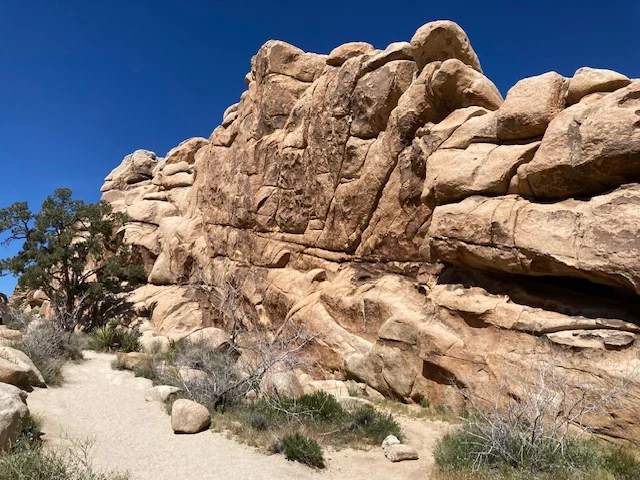
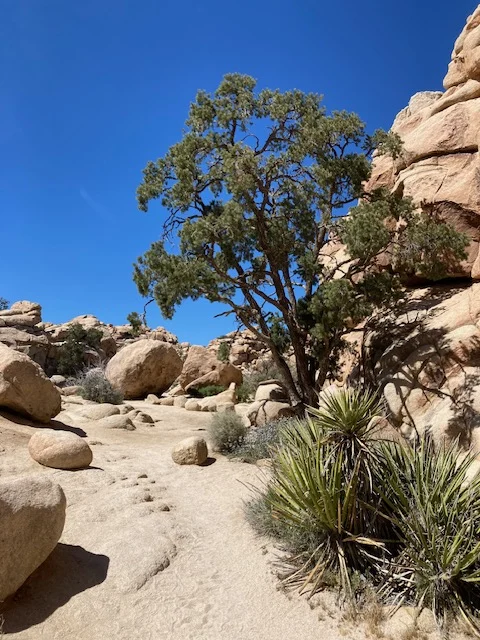
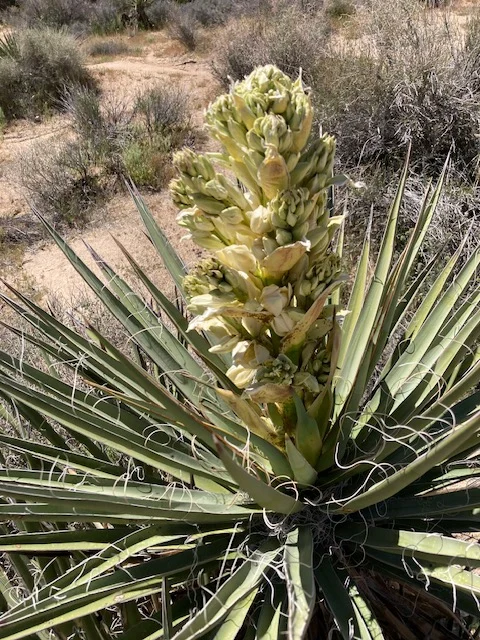
Yucca
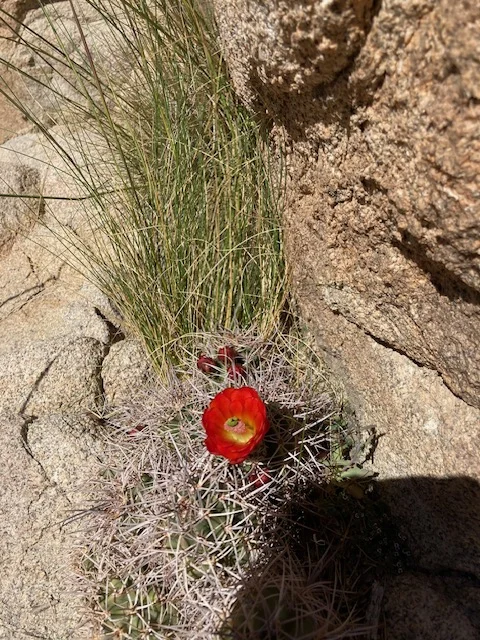
Not sure what type of cactus this is. It was anchored in a corner of the stone steps and sported one beautiful flower.
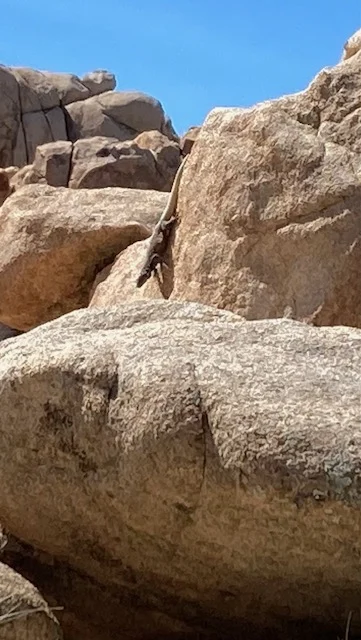
During the hike, I got pulled into a family for a while by a prankster who sneaked behind me to throw off his family that was a head of me on the trail. He wanted to see how long it would take for them to notice and started a conversation with me. I ended up walking with them for quite a while. I also had the opportunity to be still and watch a lizard with a couple of women. I’m not sure what type of lizard it was, but I think it was a chuckwalla. Its yellow tail was longer than its dark body.
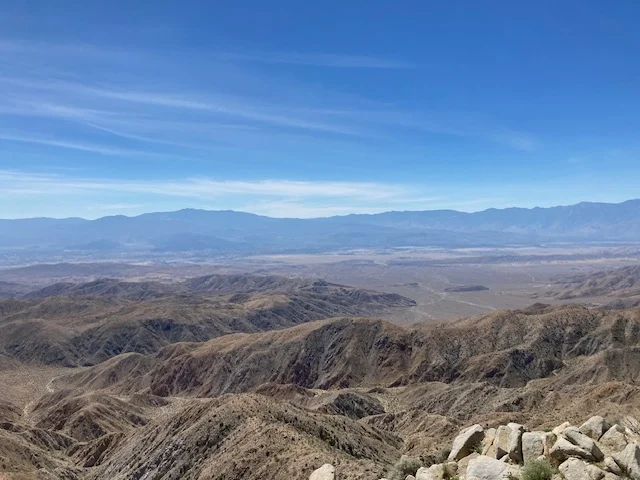
I drove up into the Little San Bernardino Mountains to Keys View, which over looked the San Andreas Fault and the Coachella Valley. The view was breath taking. Sitting on a bench, I absorbed the sun, the breeze, the view… Seemed like I was on the edge looking out over the world.