
Carlsbad Caverns National Park is right across the border into New Mexico from Guadalupe Mountains National Park. In fact, and this I did not know, Carlsbad Caverns National Park is in the Guadalupe Mountains range, and there are more than 300 caves within the Captain Reef fossil reef of the park. I had been to Carlsbad years ago, when my children were small, but since it is so close, I had to stop.
The discovery of the cave entrance, and the first to enter, is unknown. Native Americans have known about the cave for hundreds, if not thousands of years, and the possibility of early Spanish or European settlers knowing of the cave is there, but the first credited anglo explorer to enter was a 16-year-old boy named Jim White. In 1898 he found it by accident when he saw what he thought was a fire while rounding up cattle in the mountains. Riding closer to assess the situation, he realized what he thought was smoke was actually thousands of bats bursting out of a hole in the ground. Intrigued, he went back a few days later and lowered himself into the hole on a rickety ladder constructed of wire and pieces of woods. That began decades of exploring and guiding others into the cave.
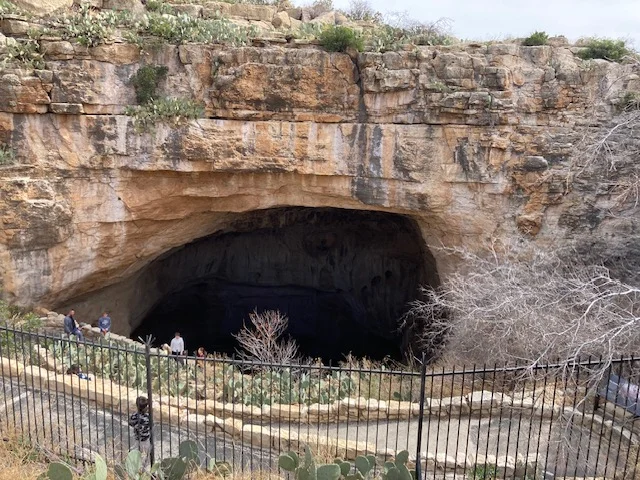
Early visitors to the cave were lowered to the floor in guano buckets. Yes, you saw that correctly. Guano buckets. Guano is the feces from bats, and it was mined out of the cave for about 20 years, from 1903 to 1923, to be used as fertilizer for citrus trees. Now, if you choose to walk the switchback natural trail into the cavern to the big room, it takes about an hour to go the 1.25 miles, descending 79 stories.
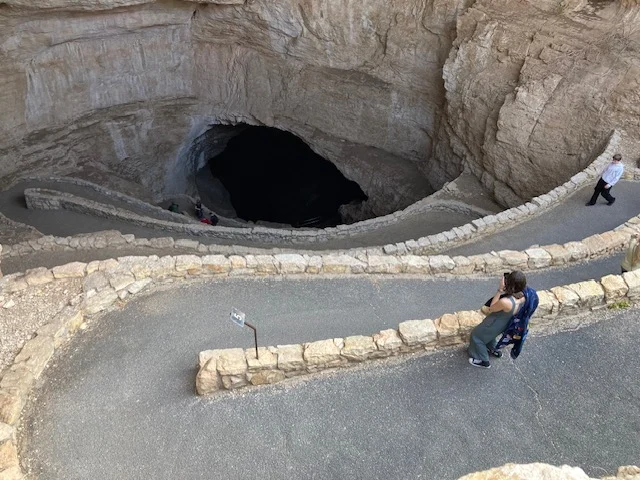
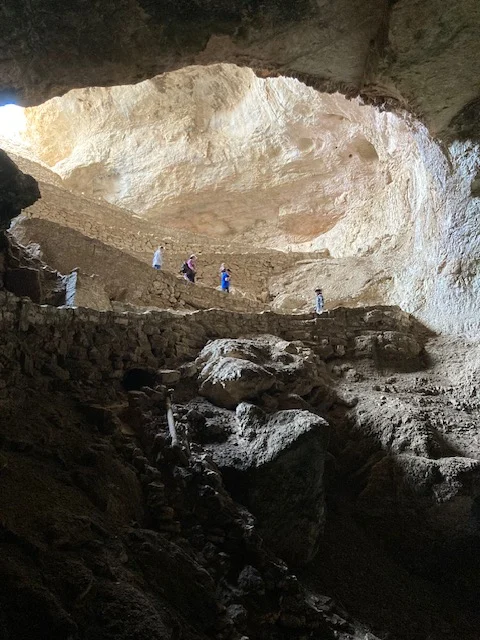
I wasn’t even near the bottom when I took that photo looking up at the entrance.
One of the things that drew me to Carlsbad is the exit of the bats in the evening. I really wanted to sit and watch them escape into the night. But, I visited a little too early. The bats do not return to the cave from their winter home in Mexico until sometime in April or early May. I did have the privilege to see some cave swallows. Walking the natural trail down, when I was still near the top, I looked up at the dome ceiling several stories up and a few cave swallows were circling close to the top. It was rally cool! Even now, thinking about the experience, a calmness, and gratitude, washes over me.
A photographer was invited to tour the caves with White during 1915-1918, and those photos taken in the scenic rooms and the big room stimulated national interest in the caverns. Robert Holley, from the General Land Office, guided by White, surveyed and mapped the caverns in 1923 and recommended Carlsbad be named a National Monument. That designation came later that year.
Though trails had already been constructed by White, the first trails to be constructed by the National Park Service were done in 1926, four years before the park became a National Park. Later in 1932, the first elevator was placed in use. Now visitors have a choice of walking down the natural trail or using one of the elevators to descend into the cavern. I chose to walk the trail.
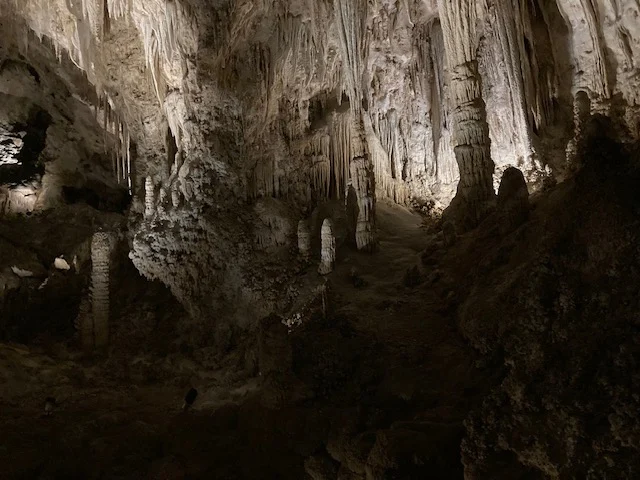
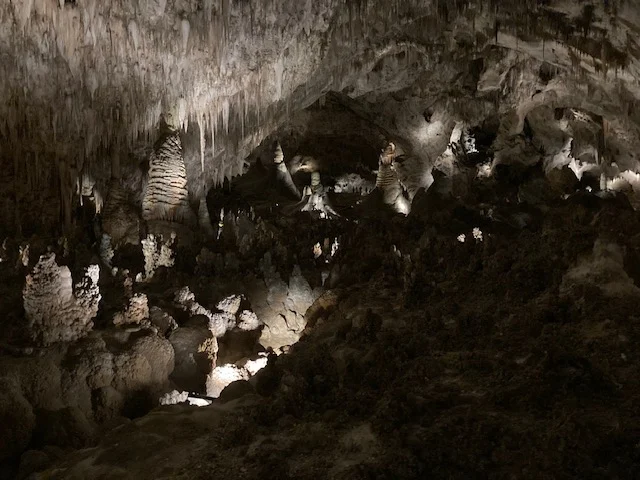
Descending into the darkness was both eerie and magnificent. Realizing the smallness of my stature and its insignificance in the scope and size of the caves is awe inspiring. I’m grateful for the paths created giving a stability to explore without destroying anything in the environment. One interesting thing I didn’t think about is no matter how careful we are, we always leave something behind – the lint that falls when clothes rub against itself as we walk, the piece of hair that falls to the ground, the moisture of our breath as it sinks to the floor. I thought it was interesting how some of those things, like the lint, actually become food for the spiders who live in the caves.
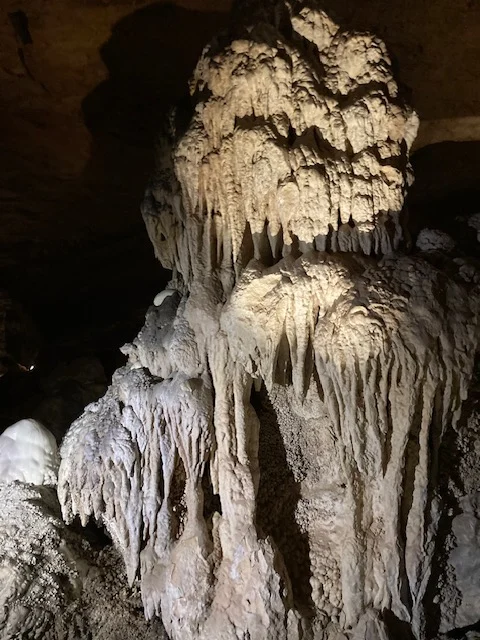
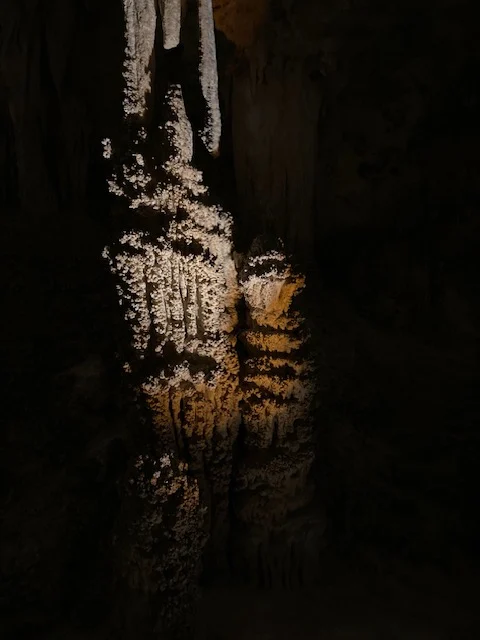
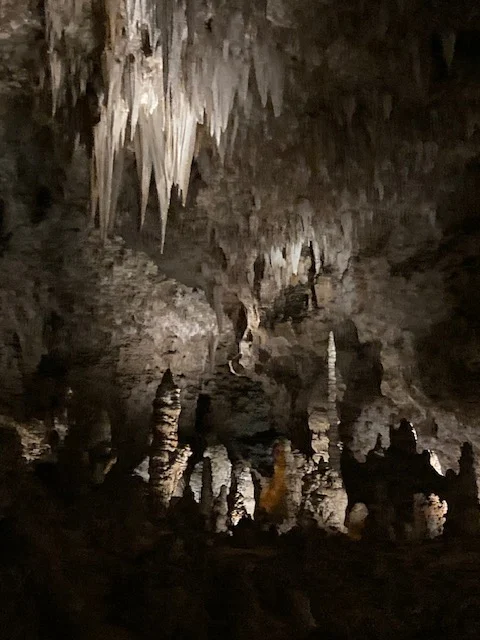
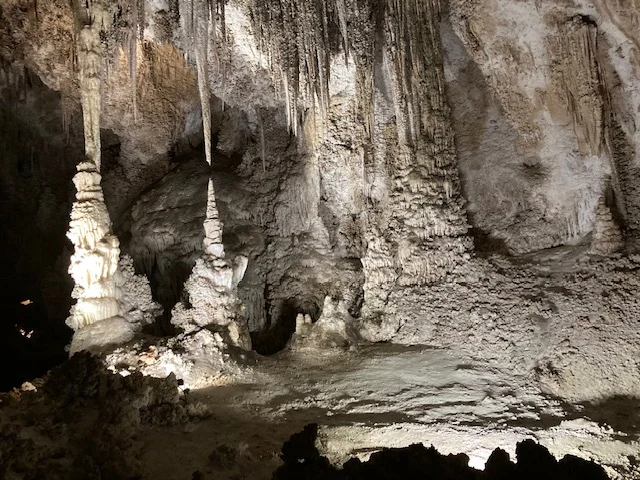
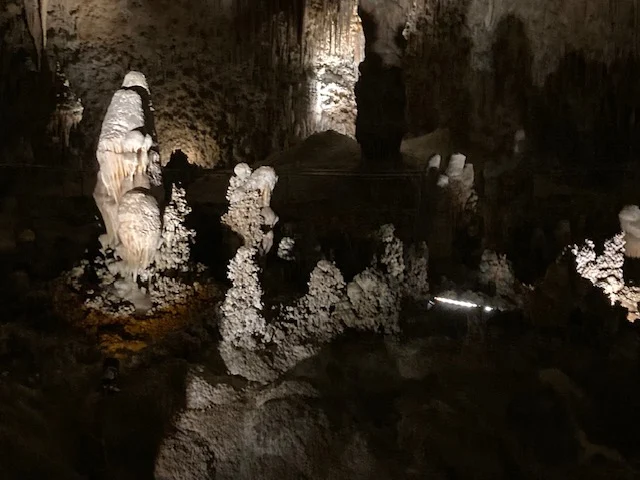
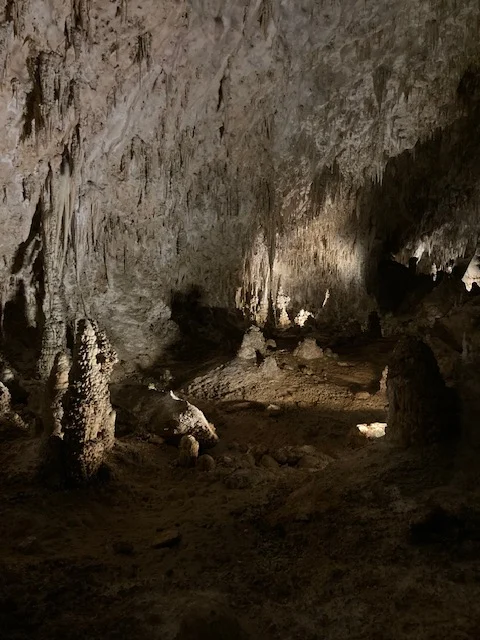
The stalactites, stalagmites and various formations created by water are fascinating. Some are smooth like ribbons, some bumpy and porous looking, some in which faces appear, some shaped like animals. Your imagination can go wild looking around, and the enormity of the space is incredible! I am always amazed when visiting caves at the structure below ground, not the parts made by man, but the hole under what we would consider a solid ground, and ecosystems in that hole, ecosystems as individual as the holes themselves.
It is hard to capture the expanse of the caves through the lens of a small iphone, though I did try.