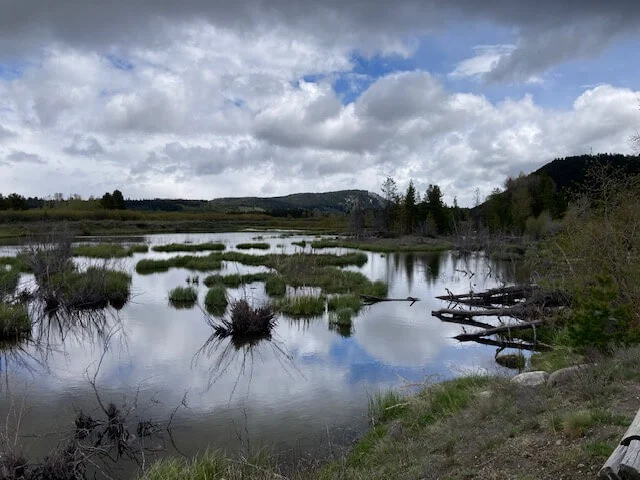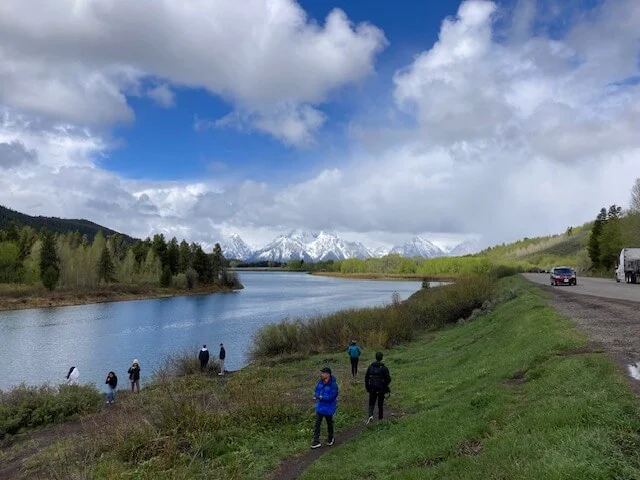

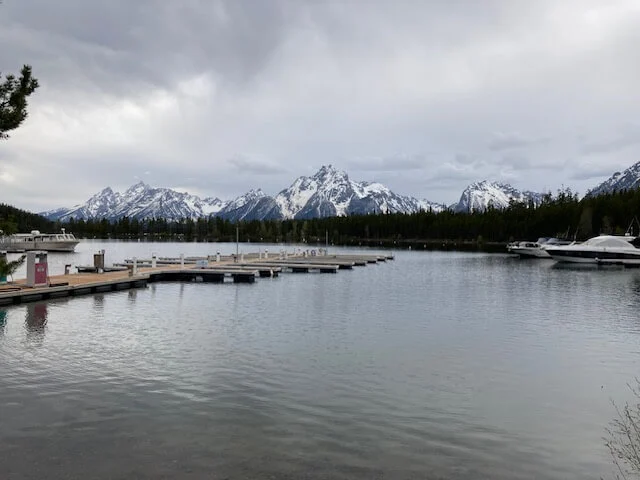
Driving through the Grand Tetons is a treasure in itself, even without stopping, hiking or checking out the views. The snowcapped craggy mountains create a glorious backdrop and border for the chain of alpine lakes at their feet, and the Snake River winding through the tree-lined channels adds even more beauty. Of course I had to stop, hike and breathe in the magnificent beauty.
After leaving Yellowstone, I drove south through the Tetons to Jackson where I spent the night. It was later than anticipated because I spent so much time in Yellowstone. The first photo was taken on my way to Jackson.
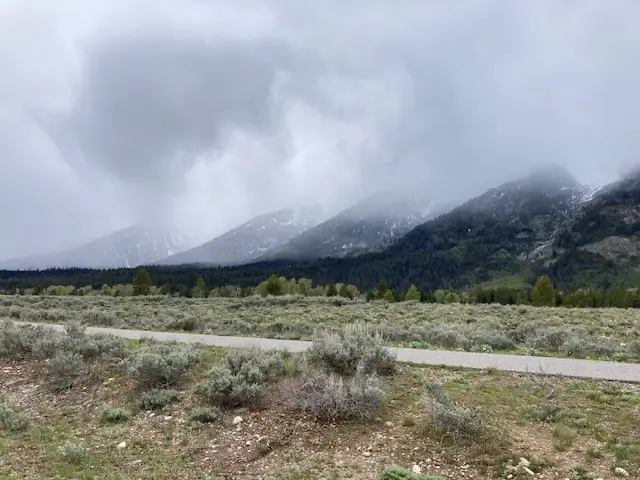
Anyway, stepping out of the hotel the next morning was like entering a dream. The sky cried as the low clouds drifted through obscuring the mountain tops like a mother’s gentle hand wiping tears from a child’s face. New snow had settled in the meadows and on the mountainsides, already melting as the morning progressed.
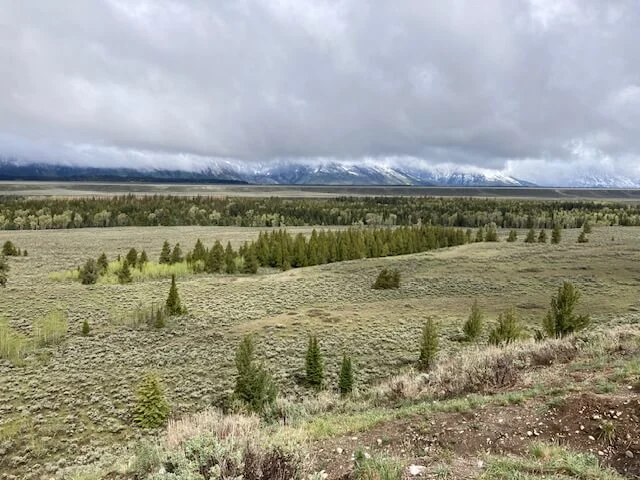
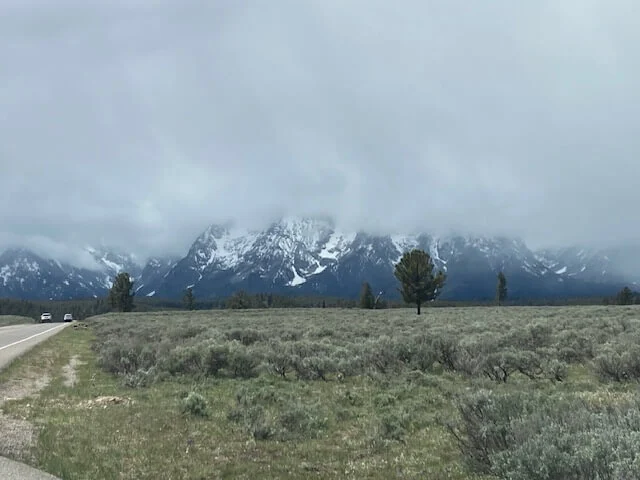
My first morning view of the Teton Range across the sage-covered plain of Grand Teton National Park.
The 310,000-acre park is named for the 13,770-foot-high Grand Teton mountain, which is also the summit of the Teton Range. What is interesting to me is the mountains have no foothills. The range began about 10 million years ago as massive earthquakes along Teton fault caused the mountains to rise and the valley to fall. Glaciers carving the peaks and canyons followed about 8 million years later. To the east, across the sage meadows and lakes, lies a gentler mountain range, with everything between called Jackson Hole.
The park itself came about because of one man’s concern regarding the development taking place. John D. Rockefeller Jr. visited Jackson Hole in the 1920s and was dismayed at the haphazard development that was marring the landscape, a landscape that boasts a variety of native species of both plants and animals. There are about 1,200 different plant species, 300 different birds, 60 mammals and 12 fish. Rockefeller Jr. started purchasing land, and eventually donated 32,000 acres to the federal government. Grand Teton National Park was established in 1929.
I, for one, feel privileged to be able to visit a park like this, to witness the magnificent beauty, to see the wildflowers in the meadows, the trees and waterfalls, the glacial lakes. The first wildlife I saw was a small group of three elk in a lower meadow near a pullout. (This is another time I would have liked to have a better camera! My binoculars worked wonderfully!)
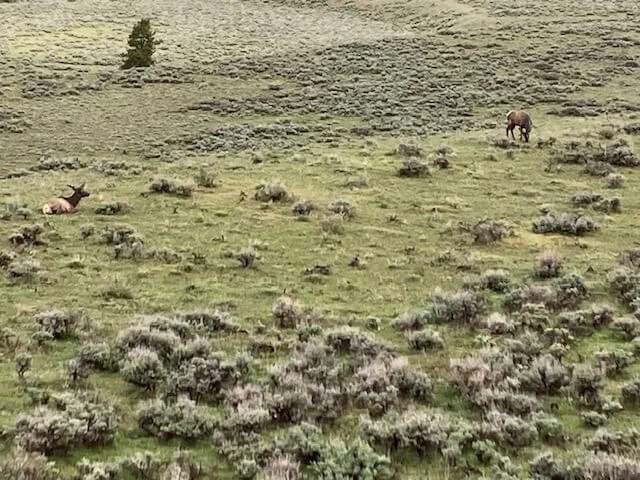
I also saw a herd of bison quite a distance away in the meadow tucked closer to the mountains on the east. Watching through my binoculars, I was able to witness a single antelope slowly moving across the meadow in their direction. They were nearly in her path. She sauntered past them and the bison didn’t react at all. I thought that was interesting…
Another fun part of this journey is the people I meet. At that pull out, I met Katya, a videographer and vlogger who travels and works with hotels. We compared notes about traveling and had an interesting and wonderful conversation.
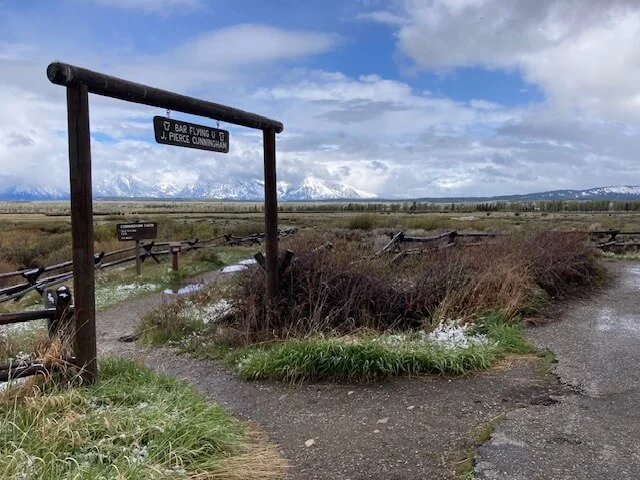
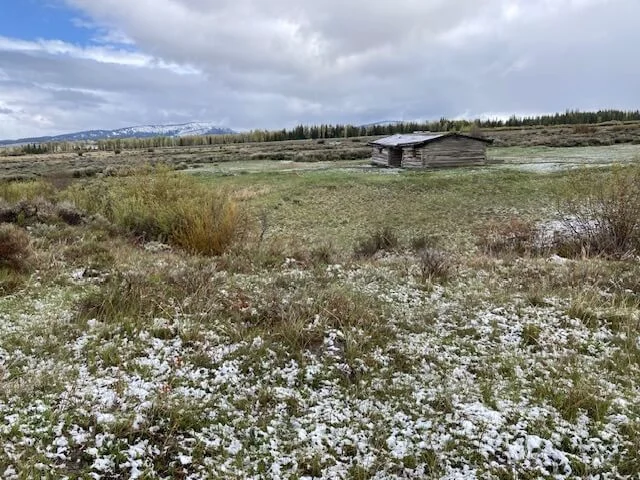
The park also has historic ranches. I stopped to check out this historic ranch, but the trail was a bit too muddy to go all the way to the house. I walked through snow and mud to get part way into the meadow.
The park also has about 250 miles of hiking trails.
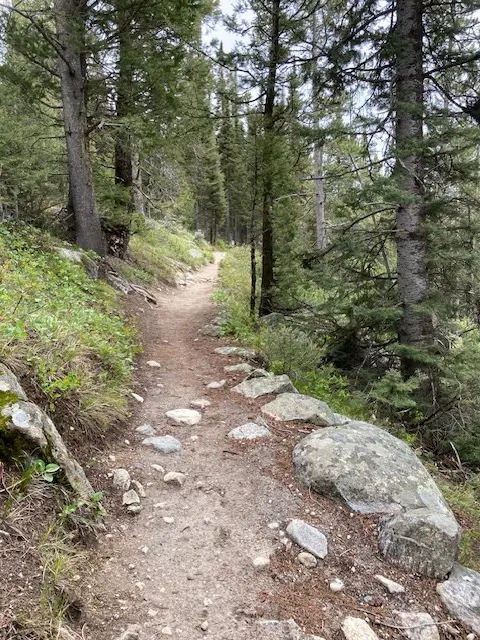
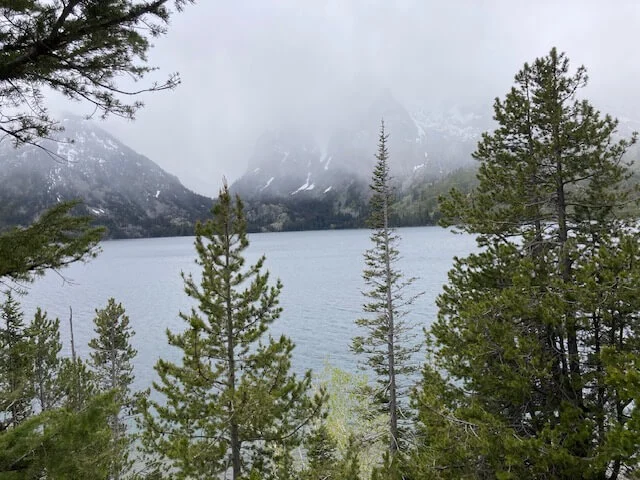
The kaleidoscope of skies that day kept me hopping. It went from rain, to dark clouds, to white clouds with sun peaking through, though rarely did the clouds leave long enough to expose the mountain peaks. I realized at one point that I was high enough in elevation that I could be walking through the clouds.
Other wildlife I saw in the Tetons included ducks, geese, pelicans, and a moose. I saw more types of birds flying, and heard many more singing. The day in the Tetons was magical!