

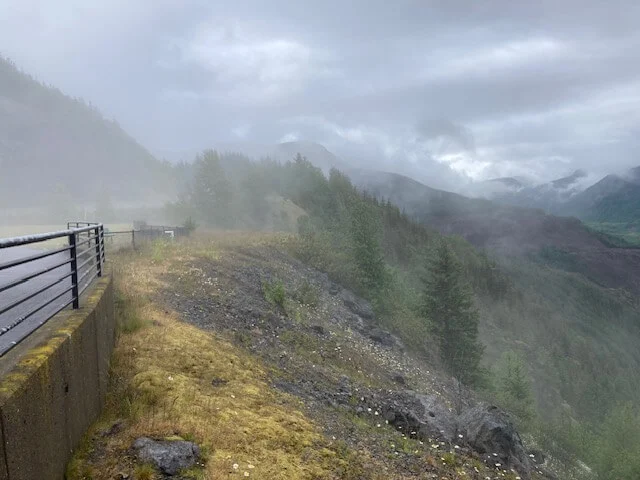
The morning Mount St. Helens erupted in 1980 I was in Wichita, Kansas, helping plan my grandmother’s funeral. I don’t remember much about the day it erupted, but I do remember seeing the photos of a vast gray ocean of ash with tree trunks stripped of their branches and greens strewn about. It looked like someone dropped a box of wood matches and dumped ash from a fire pit on top.
The mountain, shaken by 5.1 earthquake, erupted on May 18, 1980, collapsing the north face of Mount St. Helens into a massive avalanche, releasing pressurized gases within the volcano. It didn’t take long for the avalanche of rock and ice to slam into Spirit Lake, cross a 1,300-foot-high ridge and roar 14 miles down the Toulte River. A lateral explosion cut through the avalanche, sending a turbulent stone-filled wind over nearly 150 miles of forest.
At the same time, day was turned to night in eastern Washington and beyond by a mushroom-shaped column of ash that rose thousands of feet skyward. Two years later, the president and Congress created the 110,000-acre National Volcanic Monument for research, recreation and education. Nature inside the monument was left to respond naturally to the disturbance. Volcanic action continued until 1986 with thick pasty lava eruptions oozing out on top of each other creating the now 920-feet-high lava dome.
What I remember about that time is the screen that formed between the earth and the sun even three states away in Minnesota. The ash affected 11 U.S. states and five Canadian provinces. Lives were lost, bridges collapsed, infrastructure was damaged, and the ecosystem around Mount St. Helens was forever changed. One thing that came out of the research and studies done afterward was the knowledge that nature can recover and build new and thriving habitats even after thorough destruction.
Having the memories, I wanted to see Mount St. Helens and witness the renewal of nature. I made it to the Mount St. Helens Visitor Center in Castle Rock at the bottom of the mountains, and then the Forest Learning Center.
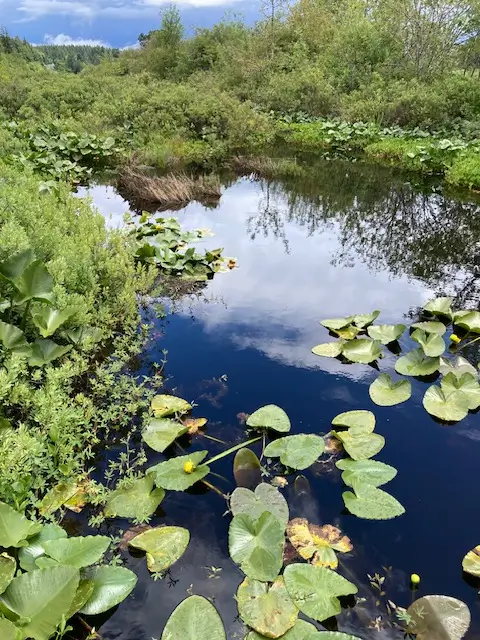
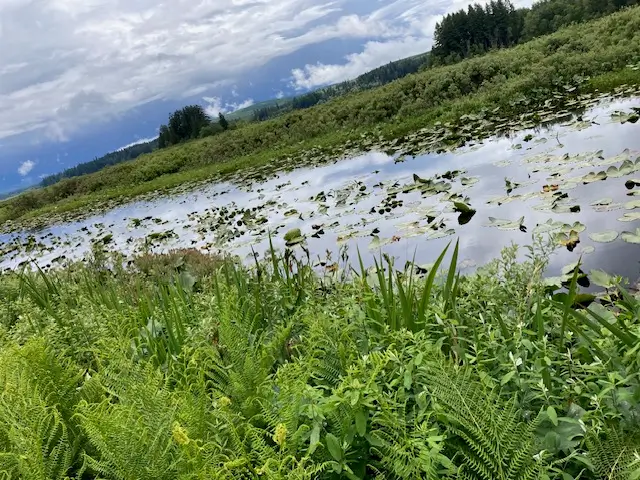
Silver Lake wetlands behind the Mount St. Helens Visitor Center.
The day was cloudy and rainy. I thought it might clear a little as I hiked the trails behind the visitor center, but that was not the case. Driving up the mountain with a dark sky through rain and fog was a bit creepy. I made it up to the Forest Learning Center, located just inside the blast zone, where I spent time standing in the drizzle and rain viewing the North Fork of the Toutle River down in the valley and the mountains across.
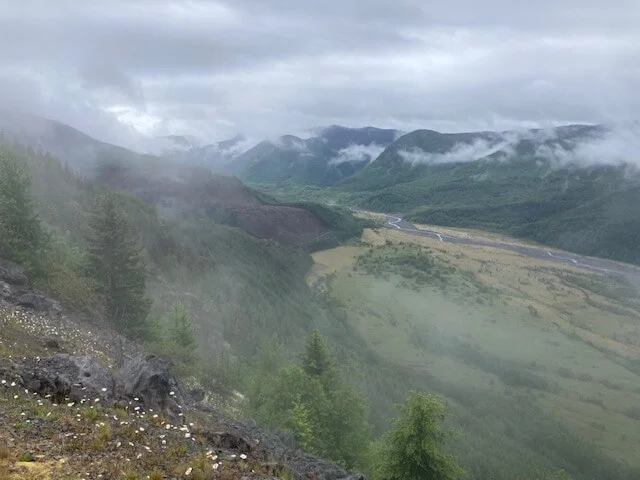
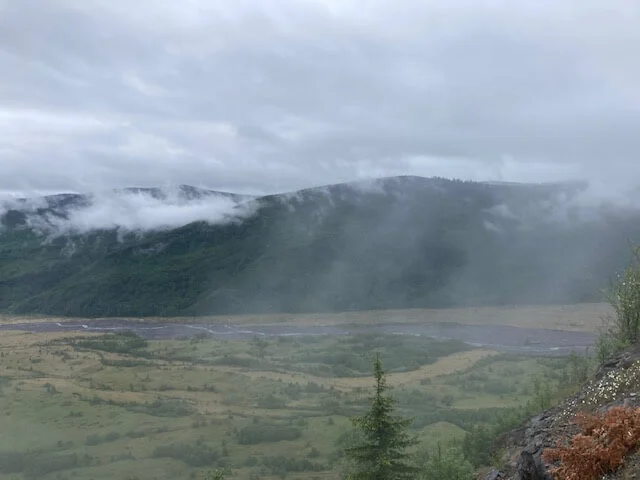
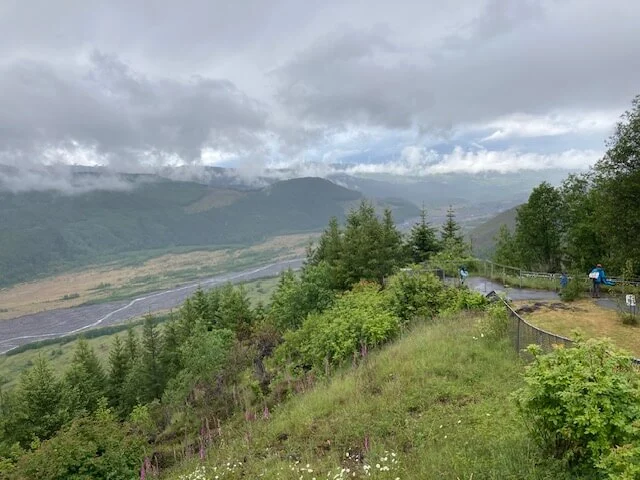
The sun would peek out for a moment here and there, but would hide just as quickly. Trying to drive farther up the mountains, the fog was so thick I could barely see in front of me on the curvy roads, giving me the impression I wouldn’t be able to see Mount St. Helens any better. I turned around and headed back down the mountain. At one point, at a lower elevation, the sun peeked out just long enough to warm a section of the road. Then it rained, a light rain with the sun still filtering through the clouds. Steam rose from the road as if someone opened dry ice and slide it across in front of me. It was magical!
Though I didn’t see everything I had intended, I’m glad I stopped. Nature sure is amazing, literally rising up out of the ashes!