
Seeing the world under our feet has always been intriguing to me! Venturing into caves, mostly through tours, is something I have done since before my children were born. In fact, I went into premature labor with my third child after slinking down a hole my large pregnant belly barely fit through into a huge round cathedral of a cave with a waterfall at one end!
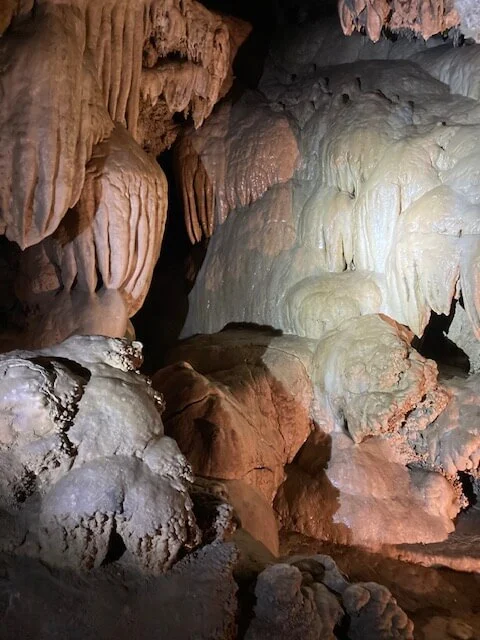
The caves at Oregon Caves National Monument, located in the Siskyou Mountains in Oregon, are different than any caves I have seen before! Oh, the stalactites, stalagmites, drapery formations, pillars, and flowstone are there, just like any other cave. But the majority of the walls are marble, gorgeous marble! There are places in the ceiling where no water drips through and I could see striped marble just like you would find on a countertop in a kitchen. Strolling through the dim light, walking on pieces of marble interlaced with other material to create the trail and stairs, along with a marble ceiling, is something I have never experienced before. The marble on the stairs looked like beautiful polished rock!
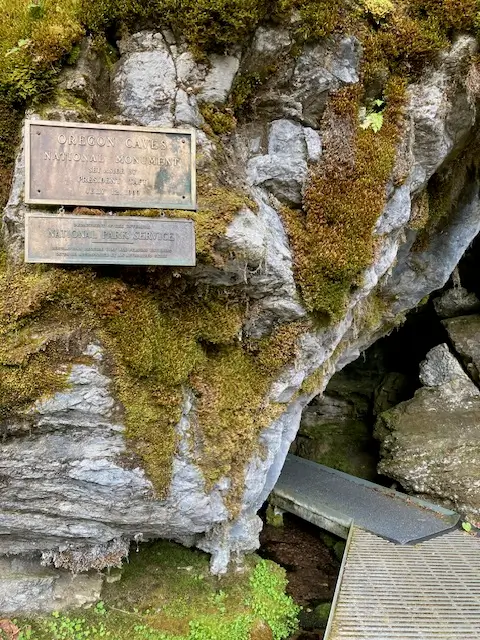
The caves were discovered in 1874 by Elijah Davidson, who was hunting with his dog. His dog ran into the cave chasing a bear, and Davidson went in after the dog. The story is he only had six matches to light his way, and kept going until they were exhausted, making his way back out of the cave in total blackness. The 15,000 feet of caves do not run in a straight line, with curves and angles beginning a short distance from the cave entrance. The ranger who took me through the caves turned the dim lights off at an approximation of where the matches would have been exhausted, and it was complete blackness. The entrance light was not visible at all! If it were me, I probably would have turned around when half my matches were gone so i could see a little on the way out.
For the next two decades, private investors tried to turn the caves into a tourist venture, which failed. The 4,5554-acre Oregon Caves National Monument was established in 1909. The visitors and usage of the park increased in the 1920s with the growing roads, usage of automobiles, and boosted tourism from Grants Pass. The National Park System assumed control of the caves in 1933.
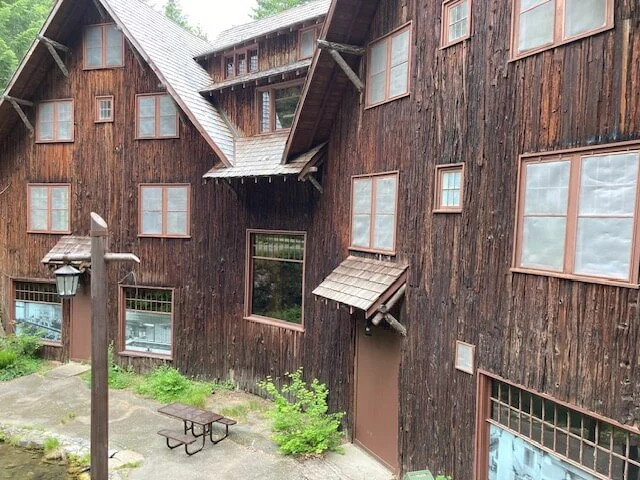
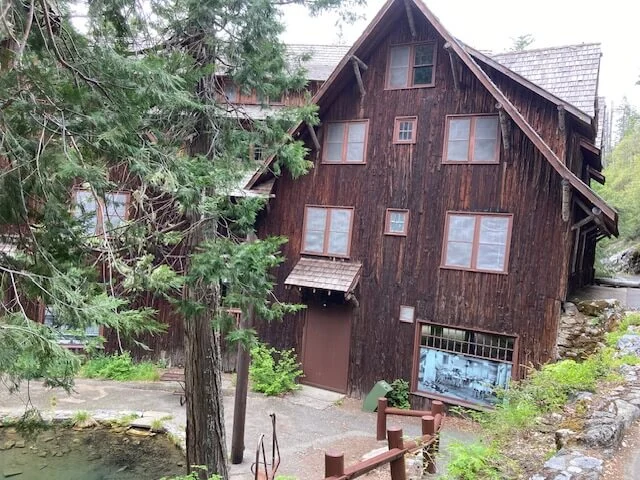
The 6-story hotel, Oregon Caves Chateau, was built in 1934, and is now a National Historic Landmark. It is currently closed for significant repair and rehabilitation work. The plan is for structural and foundation stabilization so it can withstand further seismic activity, and then it will be restored to once again offer its 23 unique overnight rooms, a fine dining room with canyon views and a 1930s-era coffee shop. My understanding is there also is a stream that runs in the dining room. From the outside, it looks like a gorgeous place! I would have loved to see inside.
The long narrow cave tour, which included a lot of ducking to prevent hitting my head on the ceiling stones, was amazing. Shortly after entering, we found a couple of bats, one clinging to the wall on the side of the trail and one hanging from the ceiling. We also saw mushrooms growing on a stick on the cave floor, and some algae growing in the moisture near lights. The ranger said the mushrooms and algae would not normally grow inside the cave, but the lights, though they are dim, provide just enough light for them to grow.
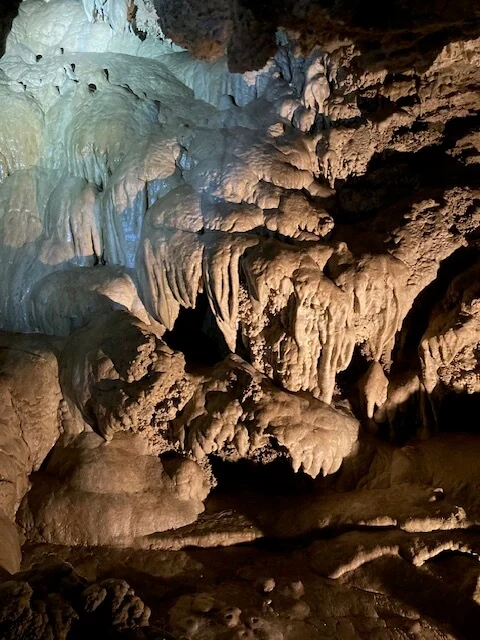
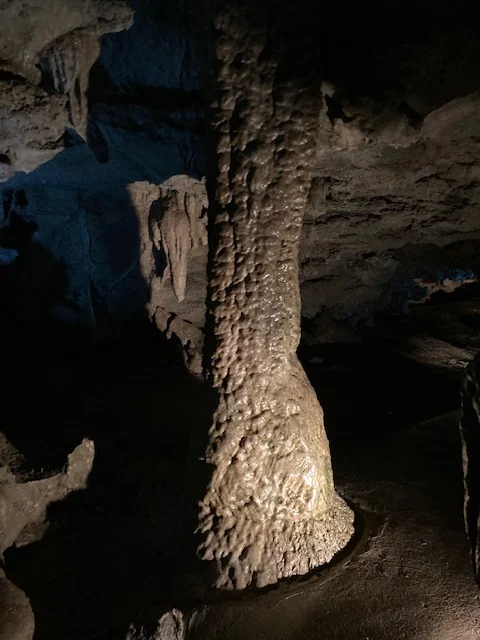
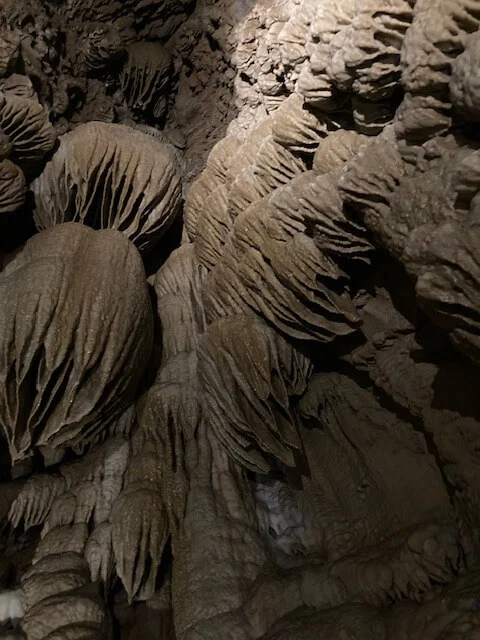
One of my favorite formations I had never seen before was a calcite crystal stalagmite on a shelf that was almost pure calcite. The stalagmite was about three inches tall, and the shelf was about two inches thick. Holding a flashlight under the shelf with the light pointed up made the stalagmite glow! I could see the light all the way through showing the individual pale yellow crystals that formed the stalagmite. Other areas of the shelf were completely opaque from the soil and minerals dropped in the water along with the calcite. It was a fascinating mineralogy study.
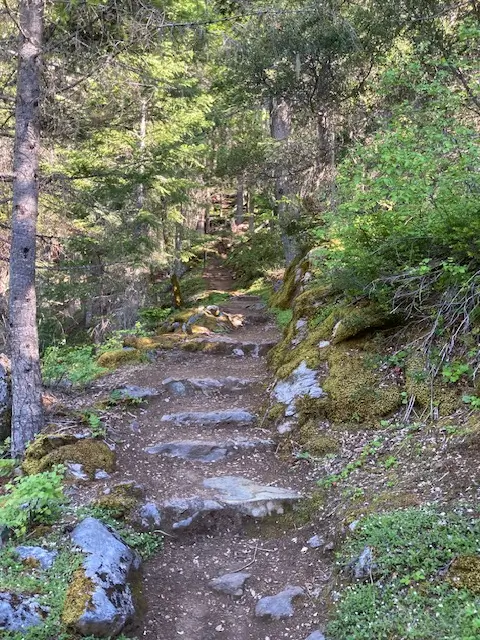
There is much more to the park than just the caves. Exiting the caves I chose to hike the Cliff Nature Trail, which is a 1-mile loop up and over the mountain, stopping to absorb the breathtaking view at the top.
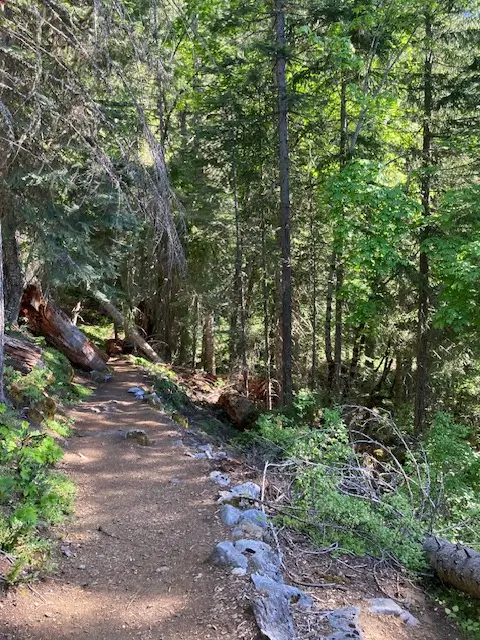
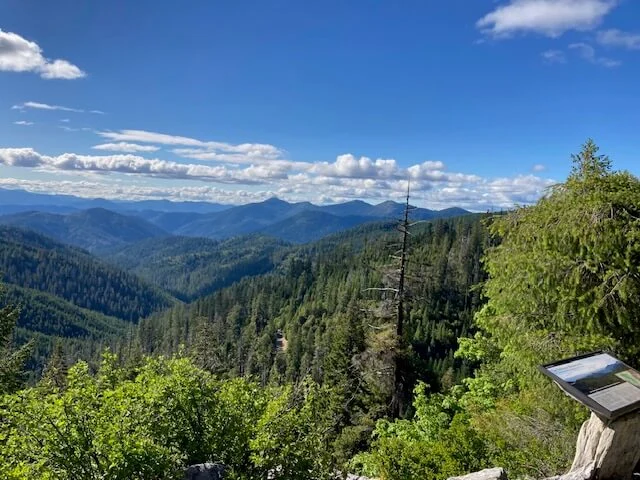
On the way down, I spotted a dear munching on the shrubs around the trail.
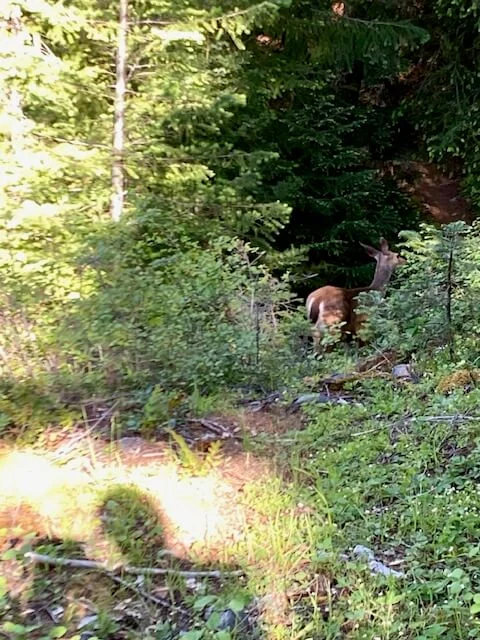
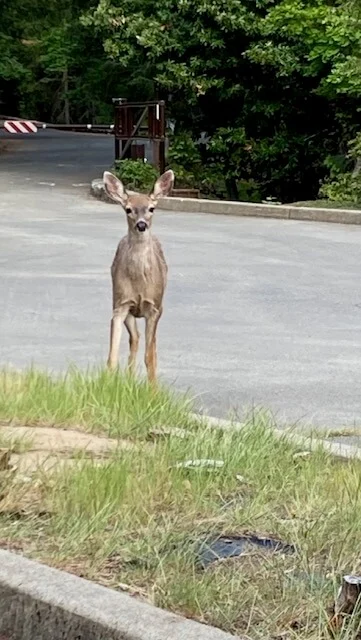
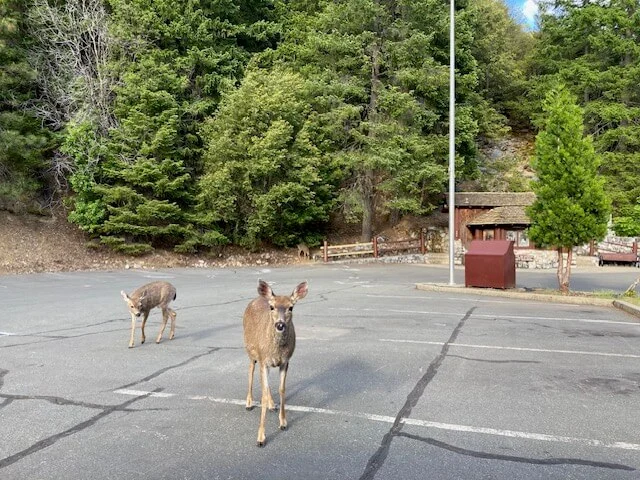
Being on the last cave tour of the day, and the only one on the tour, (which was great by the way!), I didn’t run into anyone on the mountain, and when I got back to the visitor center it was completely deserted. By the time I hiked the nearly 1 mile from the visitor center back to the parking lot, my car was the only one left. The only living things in the area, besides the trees and plants, were four deer grazing on shrubs near the parking lot’s edge, a little mountain squirrel and birds. Sitting in my car, I rolled down the windows and ate my dinner of vegetables, cheese and nuts, watching the deer. As they got comfortable with me being there, a couple of them ventured slowly across the parking lot. When I crunched on the nuts, everything changed. Heads lifted, ears perked. Every time I crunched another nut, the deer grew more curious, and a couple moved closer toward my car. One of the deer got so curious he made a hesitant wide circle behind my car and then came back to about a parking space distance away from me. It was an interesting interaction! Sometimes, if we slow down and pay attention, there are magical experiences beyond what we expect.