

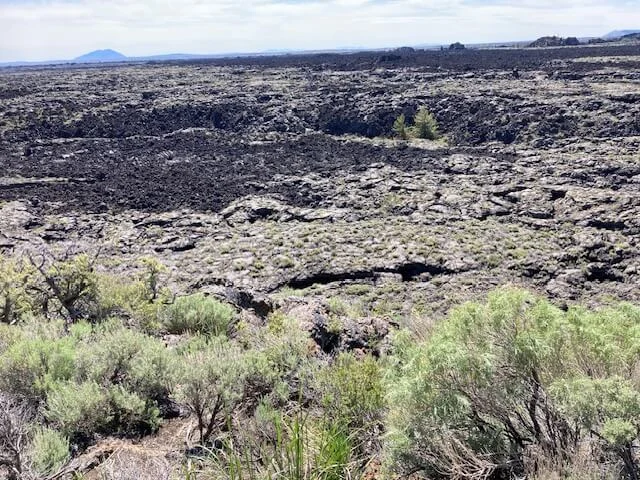
A barren textured black landscape of the Craters of the Moon National Monument turned out to be a totally fascinating place to visit, a theater showing the resilience of nature. On the sides of the lava hills, in what looks like black pea gravel, a surprise of small pink dwarf monkey flowers were popping through, naturally spaced as if purposely planted.
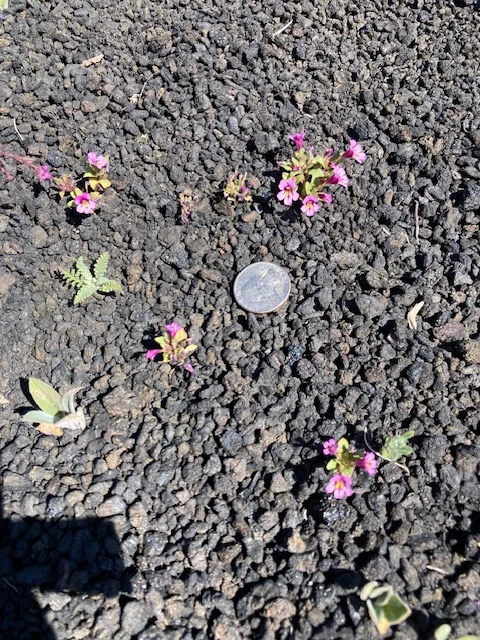
I saw a small dinosaur-looking lizard that couldn’t have been much longer than the diameter of a quarter, and other flowers hugging the black earth. Sagebrush, limber pines and juniper also dot the landscape. I guess other shrubs like fernbush and syringa grow in the deep crevices avoiding wind that robs them of moisture.
Hiking on paths through the vast ocean of lava, scattered islands of cinder cones, and sagebrush gave me a different perspective than just driving by. Lava tubes are evident on many of the surfaces, as well as through areas of collapse.
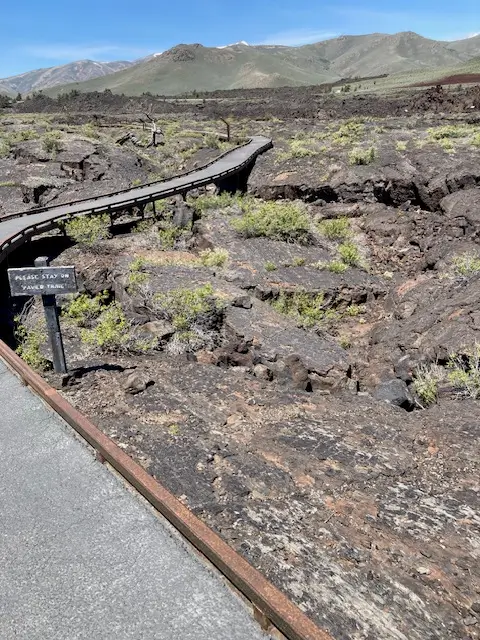
The area was created through fissure eruptions which occurred along cracks in the earths crust. There is a series of cracks that run 52 miles across the park creating the Great Rift. The fissures allowed gasses to easily escape lowering the pressure and creating lava flows. As portions of the segment got clogged, the fountains got higher, and in some areas the magma emerged with enough pressure to send the fire fountains up to 1,000 feet in the air. As the magma from the fountains droped down, it created cinder cones. Big Cinder Butte, the tallest cinder cone at Craters of the Moon, is over 700 feet high. There are more than 25 of these cinder cones in the park, a couple of which you can actually look into.
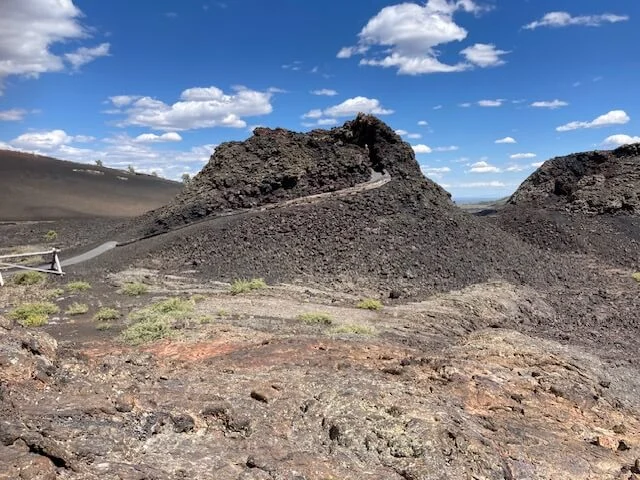
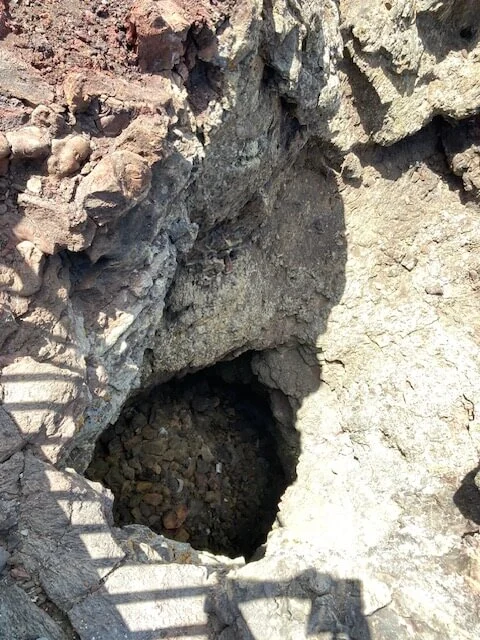
There are about 60 lava flows visible on the surface of the Craters of the Moon lava field, and 20 of them have been dated. The oldest is only about 15,000 years old, which is young itself. The most recent has been dated about 2,100 year old.
There are several different kinds of lava flows, two of which are prominent at this park, a’a lava and pahoehoe lava. Both are Hawaiian words. A’a is a rough, jagged, or clinkery surface and pahoehoe has a smooth, ropy, or billowy surface.
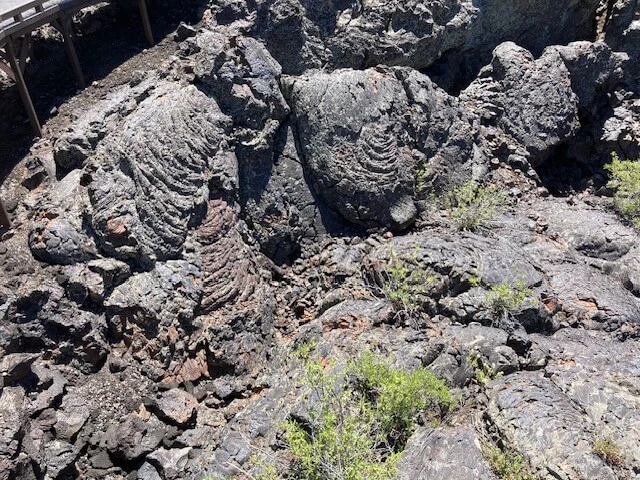
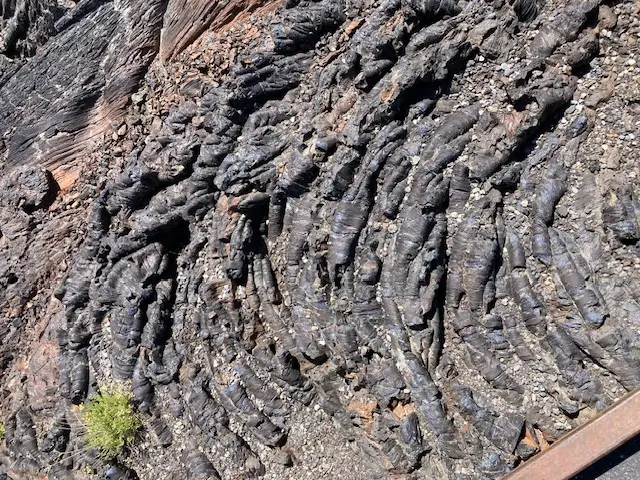
The best hike was out to the caves, but I was unable to wear my hiking boots or take my cell phone to protect the bats. Many cave areas don’t allow anything that has been in a previous cave to stop the spread of a white nose syndrome that ends up killing the bats. It is caused by a fungus whose spores are hard to remove from clothing and objects. Along the 1-mile trail you walk an uneven volcanic terrain and see lots of examples of lava tubes, different types of lava flows and areas of collapse where the ceiling of the lava flows became too heavy.
Lava tubes are created as the surface lava is cooled and hardens though the lava below is still flowing. Some of the lava tubes are large and others very small. The whole thing is fascinating! And the colors, brick reds, browns, blacks so black they looked blue in the sun. Amazing!
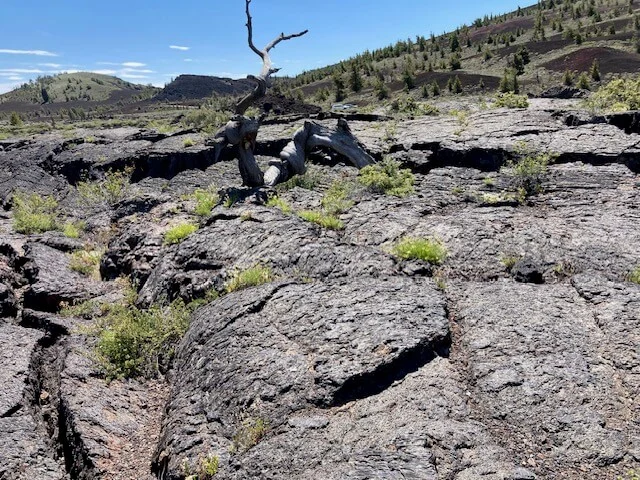
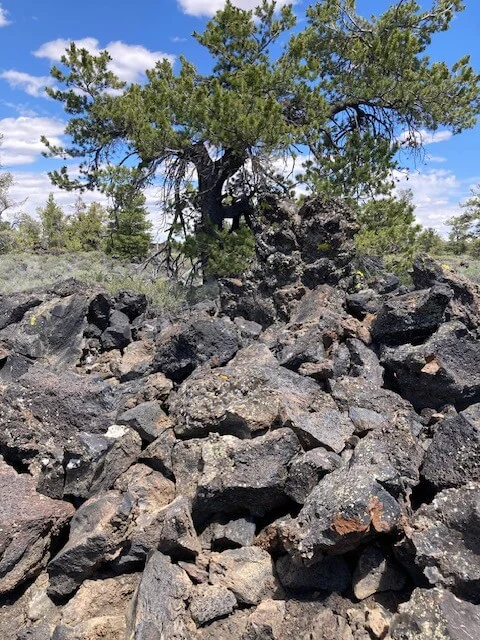
One formation I didn’t mention before is the block lava. These lava flows were very dense and have a surface of angular blocks. I walked through an area filled with stacks of these block lava. They reminded me of the rocky cliffs in Northern Minnesota.