“Going to the woods is going home.”
-John Muir, 19th-century naturalist and conservationist
That is exactly how I felt as I drove into Yosemite National Park! After spending the previous day traversing the Sierra Nevada Mountains through Sequoia National Park and Kings Canyon National Park, I chose the route into Yosemite with the fewest switchbacks and the lowest elevation. One day of high elevation, white knuckle driving was enough. I am so grateful I made that decision!
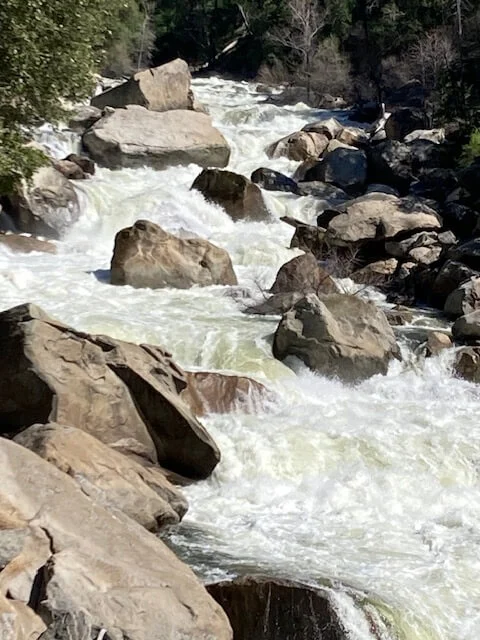
Driving into the west side of the park on 140 followed the beautiful, loud, powerful cascading Merced River. The spring melt thrashed over boulders and rocks, creating small falls and the penetrating sound of power. I had planned on making it to the park by noon, but I kept stopping to listen, to inhale the power, and to take photos. It was phenomenal!
Add to that the rocky cliffs and the forests of pine and cedar trees that kissed the sky, so much emotion welled up inside! Gratitude got stuck in my throat as tears filled my eyes. “I am home!” was all I could think. And things just got better from there!
The protection of the land around Yosemite National Park began as far back as the Civil War. President Abraham Lincoln signed a bill into law in 1864 protecting Yosemite Valley and the Mariposa Grove of Sequoias, with their oversight being placed in the hands of the State of California. It wasn’t until 1890 that more of the region was established as the Yosemite National Park when 1,500 square miles were set aside. With President Theodore Roosevelt’s encouragement, the state of California ceded the Valley and the Grove to the National Park in 1906.
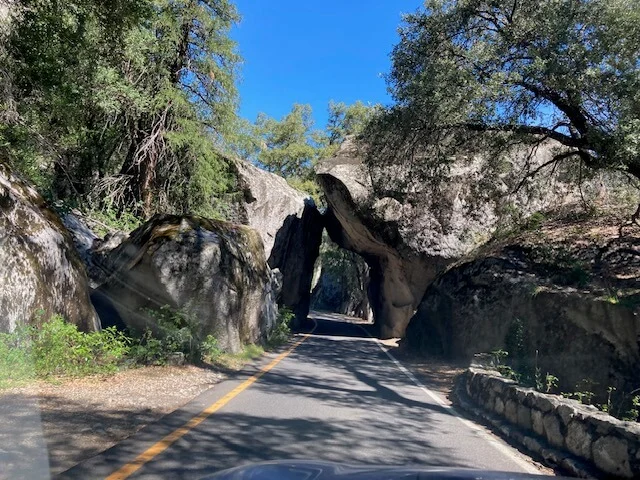
If you have been following me at all, you know that one of my missions at each park is to find the visitor center to collect the tokens and passport stamps. I usually head there first, but as I drove into Yosemite Valley, hikes to waterfalls kept distracting me! The cliffs around the valley are so high, it was like water was falling from the sky! And because of the spring melt, falls that are a trickle by August were raging over the cliff tops. it was the perfect time of year to be there!
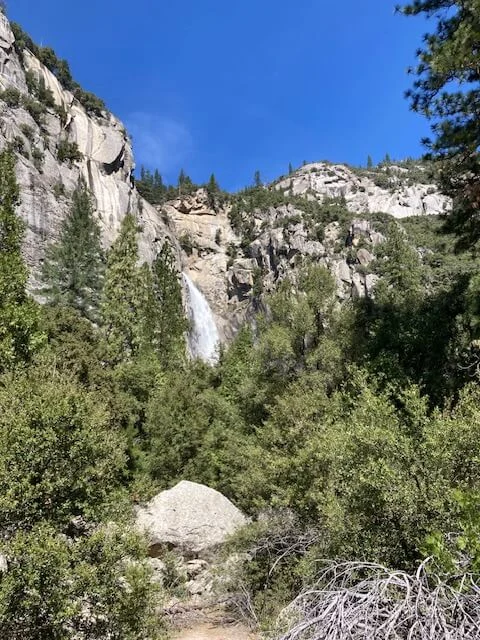
I was unable to get to the first fall I saw, but it didn’t stop me from trying to at least get close enough to take a photo. The next one was Bridalveil Fall, and it was amazing! A trail from the parking lot led me to an overlook near the base of the falls where spectators got soaked from the wind-whipped mist. The power of the water flying over the cliff in the sky gurgling and swirling as drops of water collided racing to the bottom, only to be caught by gusts of wind and thrown out over the spectators was incredible. The majesty and grace of being chilled and soaked was like the wind baptizing me with the cold snow melt.
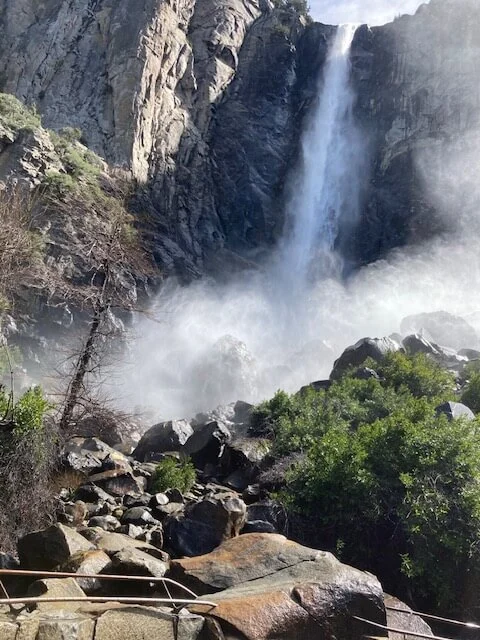
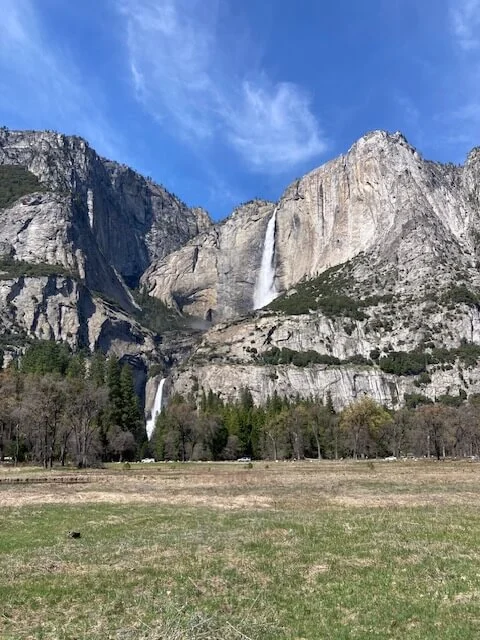
Moving farther into the valley, I found a parking lot near a large meadow. From the trail through the meadow, I could see the upper and lower Yosemite Falls on the other side of the valley. Hiking across the meadow and onto the Lower Yosemite Fall Trail I was able to look up and see the stages of the falls, and experience the whale’s-breath spray at the bottom.
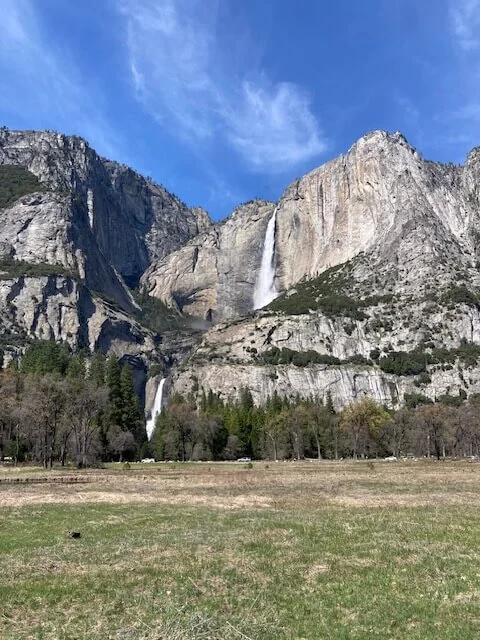
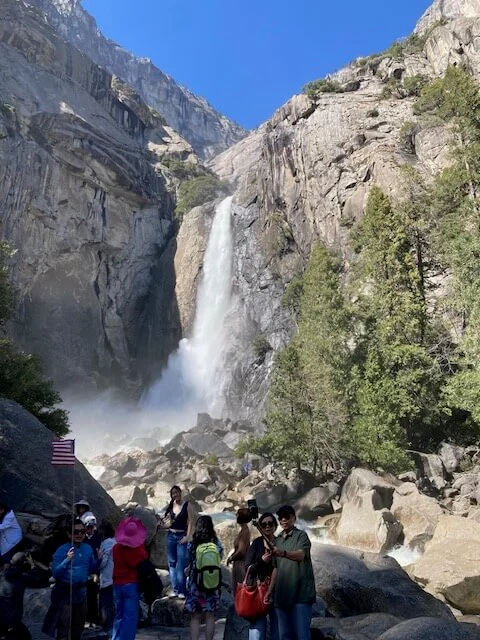
I spent the day driving around the valley and hiking through meadows and woods to water falls. I finally found the visitor center and got my tokens and stamp, and then retraced my path out of the valley to find a hotel. The plan was for one day in the valley, but I decided to stay one more day to hike to Mirror Lake.
Emerging from my hotel room the next morning, I was greeted by the comforting sound of water drops playing tag over boulders in the river. I did the day a bit differently than the previous one. There is a free shuttle that runs around the valley, with about 19 stops along the way. Instead of driving around, I parked and caught the tram, taking it to the stop for the Mirror Lake Trail, which gives a choice of hiking a road to the lake, or hiking through the woods. Guess which one I chose! Of course, the woods!
Boulders lined and littered the trail, along with a variety of oak trees, pines and incense cedar trees that kissed the sky. Caves and crevices in the boulders were fascinating, which explained why the sign warned of the area being a mountain lion habitat. The path followed the river, with water again bounding over and around boulders and rocks, actually flying over them.
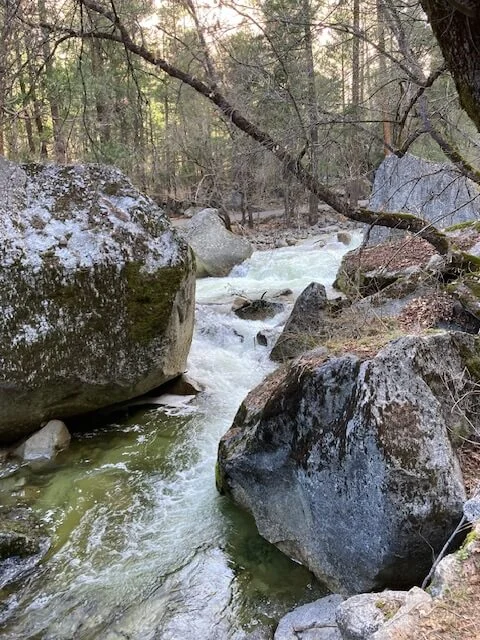
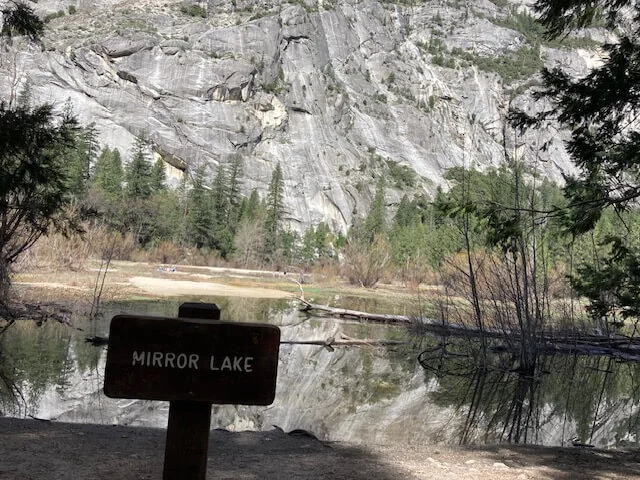
The beautiful striations in the cliffs on the other side of Mirror Lake were mirrored in the lake – hence the name – and the swollen lake stretched into the meadow.
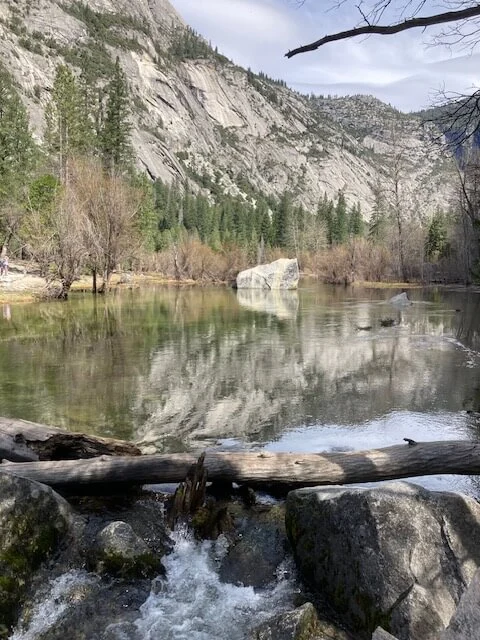
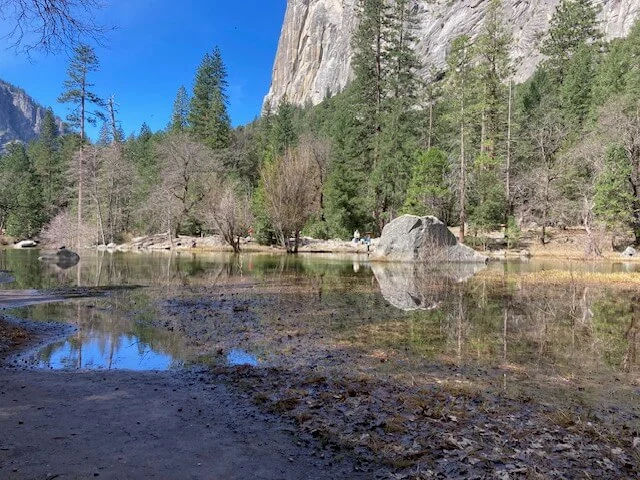
The whole area was gorgeous, and the water flowing from the lake into the river was clear, teal and powerful.
While in the park, I saw more of the Steller’s Jays, the dark navy blue bird with a dark brown almost black head. They are named after Geroge Wilhelm Steller, an 18th-century naturalist, physician and explorer who first documented the bird in 1741 while in Alaska. These birds are common in mountain evergreen forests and coniferous woods of the Pacific Coast, and are predominantly west of the Rocky Mountains.
Leaving the park was like leaving an old friend. The park is much bigger than the valley with roads that were not open yet and more than 800 miles of hiking trails. There is a lot more to explore, but being in the valley surrounded by mountains and waterfalls was incredible!