

As most of you know, I am on a National Park hunt, and as I am moving about the country, I am finding exceptional historic parks and monuments under the National Park Service. One of them is the San Antonio Missions National Historic Park, a group of four missions built by the Spanish in the 1700s with labor from Indigenous South Texans. They also constructed a fifth mission, which is in the middle of downtown San Antonio that is not part of the National Park. We know this one as the Alamo.
It is a privilege to be walking through the complexes of these missions, learning the history, realizing what religious conversion meant in the 1700s. The idea that the choice could mean staying alive, not spiritually alive but physically alive. Also, the idea of the age of these complexes, stepping in churches where people worshiped more than 250 years ago is sobering. I’m grateful these were not completely destroyed, that some restoration has taken place, and that people have the opportunity to wander through them and learn.
i did things a little backwards. All five missions – Mission Valero (Alamo), Mission Concepcion, Mission San Jose, Mission San Juan and Mission Espada – are located along a seven-mile stretch of the San Antonio River. Instead of starting at one end I actually started in the middle, at the “queen of the missions” Mission San Jose, founded in 1720.
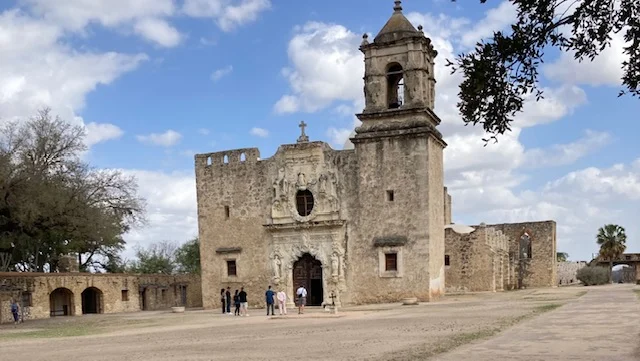
Now, these missions were not just set up as parishes to convert the indigenous population. They were full communities that often included housing. This one in particular had housing for the indigenous population, who were expected to contribute to the building and functioning of the complex. The complex included growing food, fields, a granary and a mill, as well as religious education. That education was not completely altruistic. The missions were set up with the goal of protecting and converting native people to Catholicism and train them to be tax paying Spanish Citizens so they could continue running the complex and the Spanish community on their own. Along with farming the people were taught the Spanish language and skills like weaving, metal work, and masonry.
I thought it was interesting that many of the indigenous people who entered Mission San Juan did not do it out of wishing to convert. They entered under the promise of protection from warring tribes. Imagine having to choose between going inside walls to a new religion, language and community that you will help build or being killed by warring tribes. That is one decision I am grateful I don’t have to make.
In order to enter the churches for services, the people had to convert and meet certain criteria. At one of the Missions, there is a large window behind which a priest would stand on stairs. He would open the window and preach to those who were not able to enter the church.
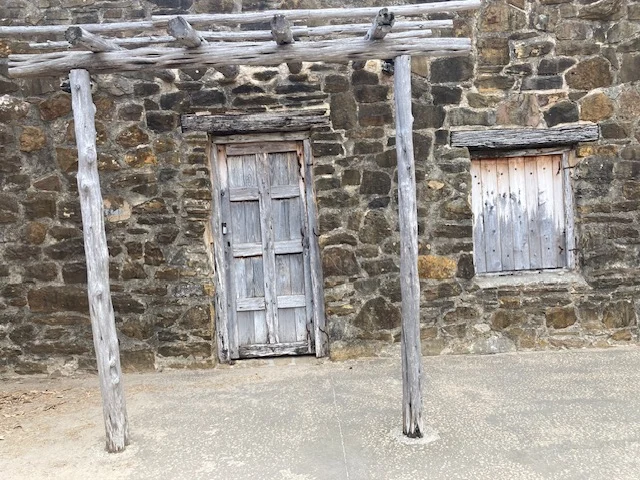
Housing units line the inside of the walls protecting Mission San Jose.
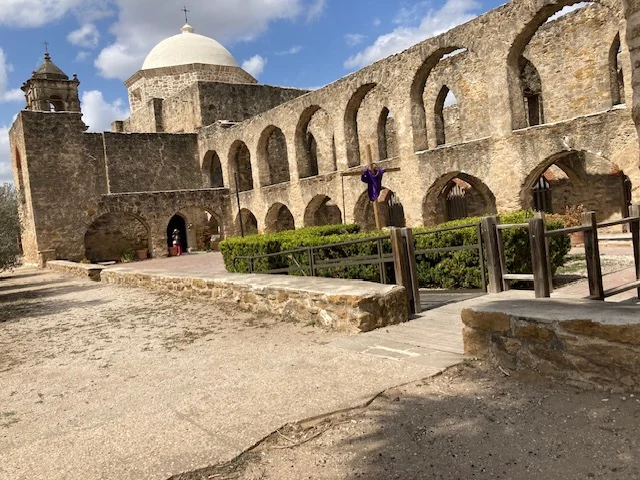
The side of Mission San Jose church
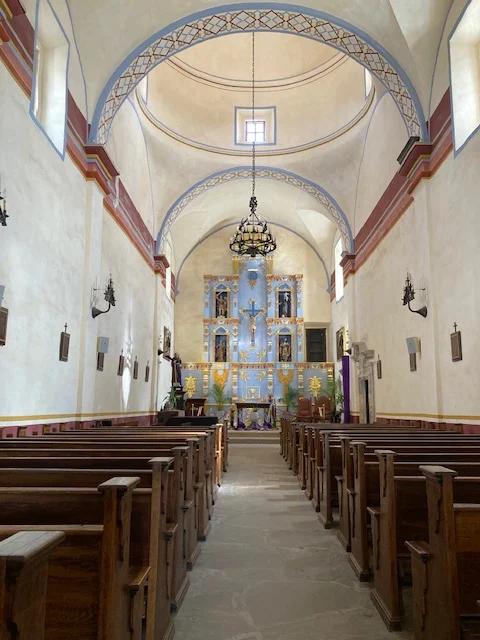
Mission San Jose sanctuary. All four of the mission churches in the National Park system are still owned by the Catholic church and have active parishes.
From there I headed south to Mission San Juan. This mission was reestablished in its current location in 1731. It was moved from a location in East Texas. it’s hard to see it now, but the complex was a vibrant community. I guess the Spanish records indicate that up to 200 people lived, worked and worshiped in this mission. You can still see perimeter walls and low foundations that show the size of the complex.
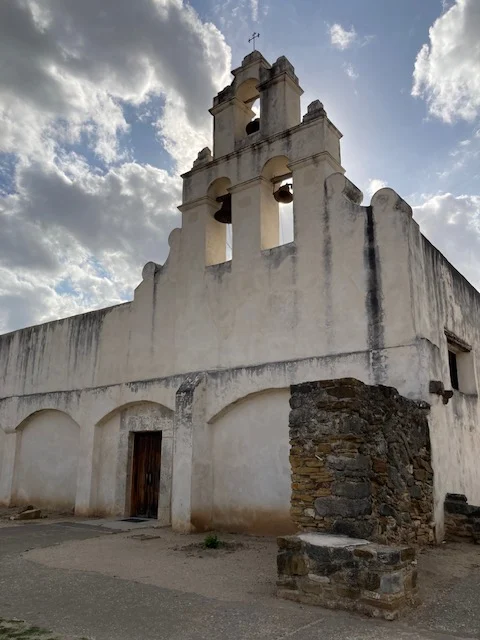
The entry side Mission San Juan church. It is actually a long white building.
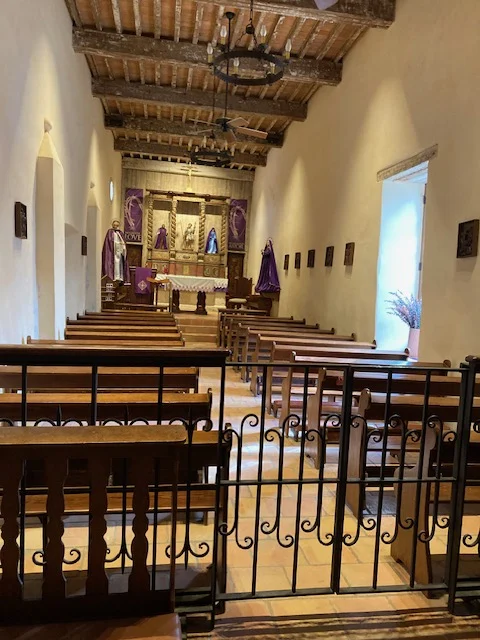
Mission San Juan sanctuary
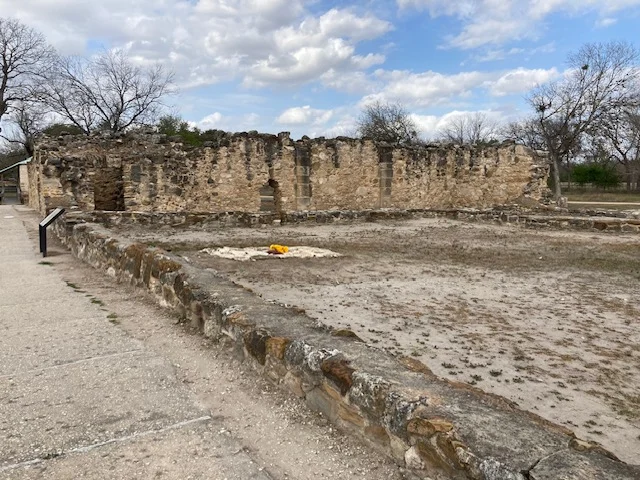
A section of the perimeter walls and low foundations.
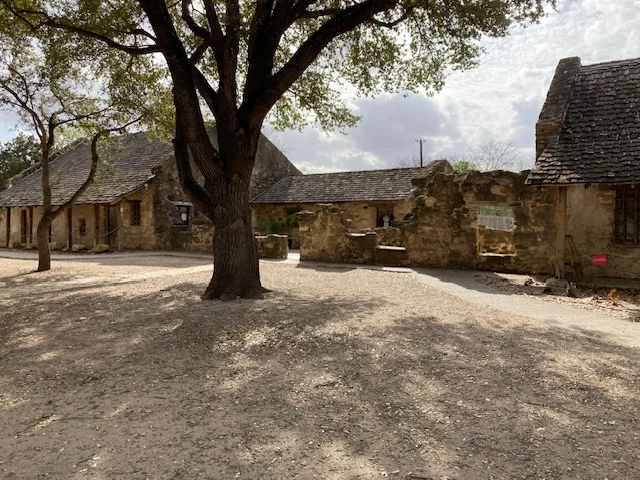
A section of buildings closer to the church.
After wandering the grounds at Mission San Juan, I went farther south to Mission Espada. Defensive systems were set up around this complex, and you can still see the ruins of the bastions. Though this mission was not at the center of the conflict during the Texan war with Mexico, there was a minor battle at Mission Espada in 1835. A Texan force of 100 soldiers successfully fought off an attack by a Mexican force that was a lot larger. Mission Concepcion also witnessed a battle during the same period of time.
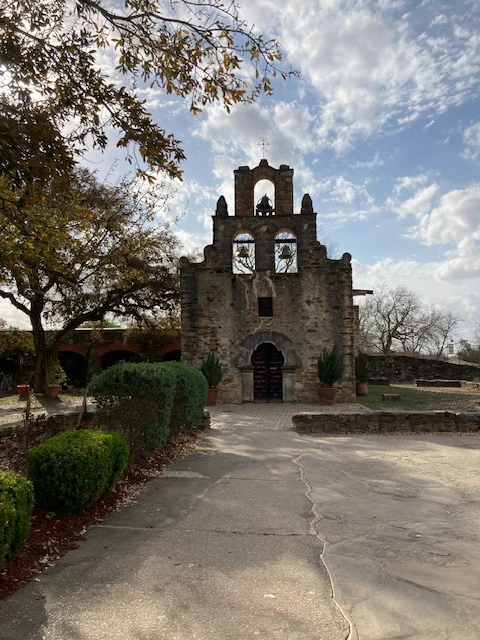
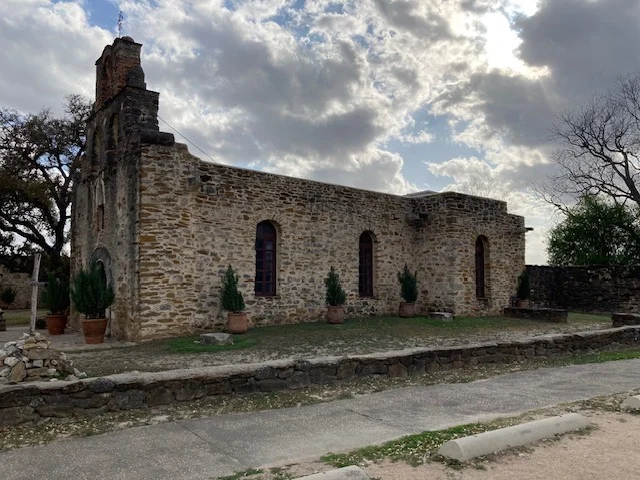
Mission Espada church
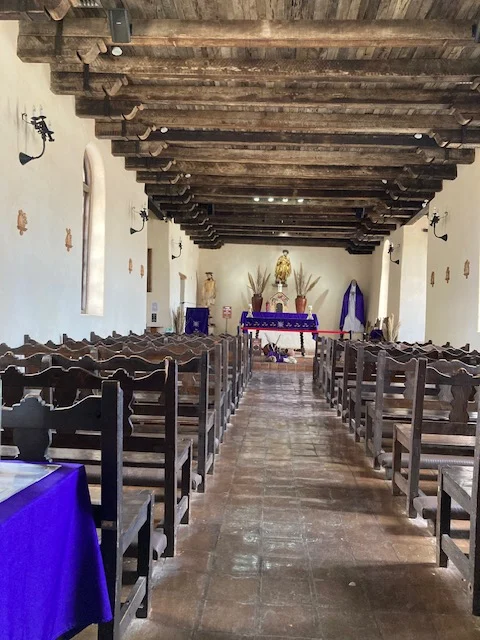
Mission Espada sanctuary. I was amazed at the condition of the wood, both in the ceiling and in the benches!
Then I traveled north to Mission Concepciion. This is another mission that was moved from East Texas to its current location in 1731. It was relocated because of drought, disease and the encroachment of the French. Construction on the current church began in 1733, and the church was dedicated in 1755. I understand there are some well preserved 18th century frescoes inside the church, but I was unable to gain access. Probably my ineptitude and being tired at the end of the day.
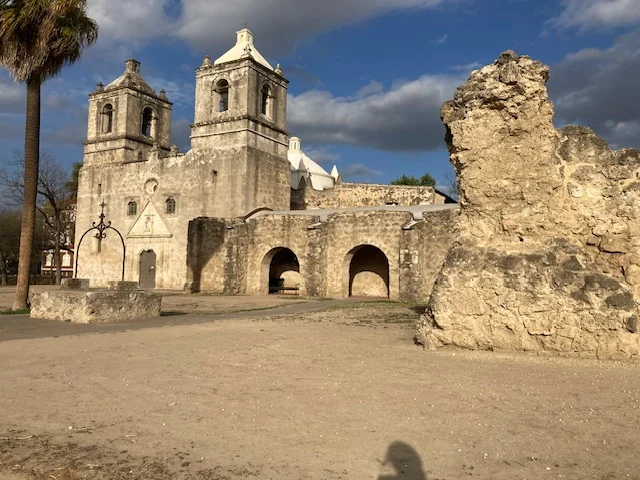
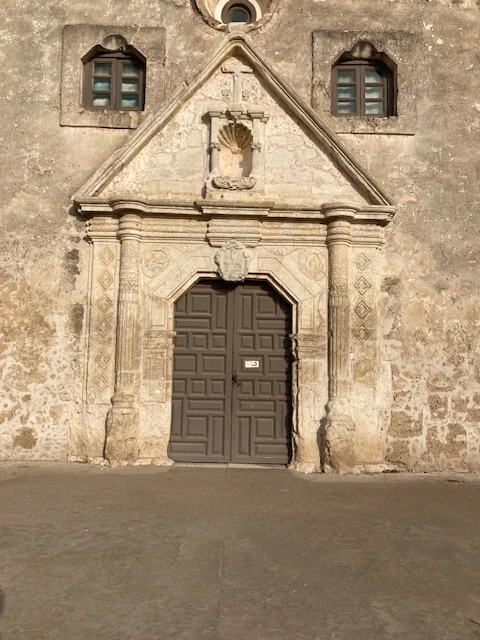
Mission Concepcion church.
I took a break and got some sleep before heading to Mission Valero, the Alamo. Navigating downtown San Antonio was not as strange as I expected, but the spaghetti junctions of the freeways were something to see. I’m glad I didn’t have to spend much time on them!
Anyway, it is a miracle that the Alamo and a couple of the surrounding buildings are still there! The high rises and buildings gobbled up the property around it, and the barracks were set to be demolished to construct a hotel in 1908. Adina De Zavala, a member of the Daughters of the Republic of Texas, barricaded herself inside the building so it would not be destroyed. After three days, the governor announced the state would maintain control of the buildings. That wasn’t the end, and more wrangling took place, but the barracks were saved, as well as the chapel. The Daughters of the Republic of Texas managed the site until 2015. The barracks are now a museum.
A 190th-anniversary remembrance was held the Sunday I visited. I didn’t see any of the programming, but the wreaths set up were beautiful! It was very crowded, but the people directing and educating the crowd were very efficient. I had, of course, heard about the Alamo and the battles between Mexico and Texans, but I didn’t realize that the Alamo started out as the Mission Valero. Though the church construction was never completed during its time as a mission, the US Military leased the site from the City and the Archdiocese of San Antonio in 1849, repaired the long barracks and reconstructed the church to fit its needs. The church, which was roofless for more than 100 years, received a roof for the first time.
There is a lot more history connected to the mission and the Alamo. It was really interesting to be there and see it. I find you learn a lot more by visiting local places than by reading about them in history books. Sometimes the locals have different information you would never hear or see.
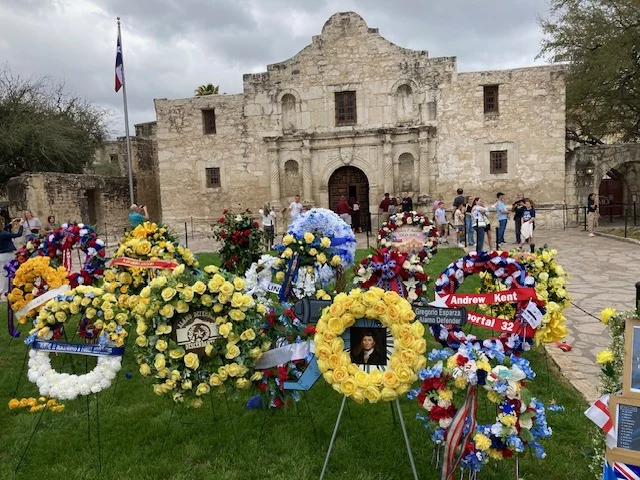
The 190th-anniversary Remembrance wreaths in front of the Alamo
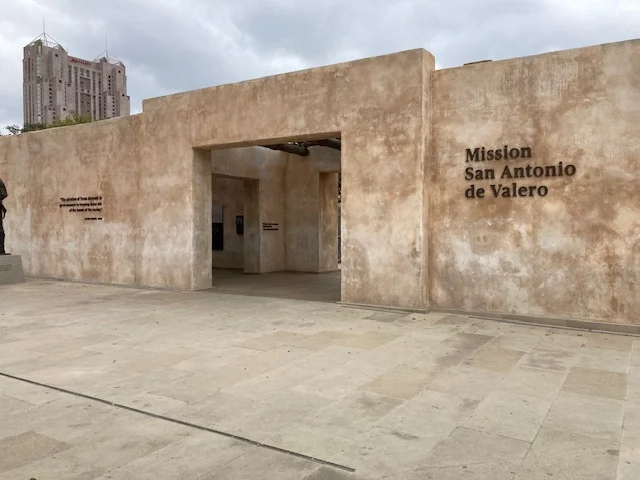
Mission Valero museum
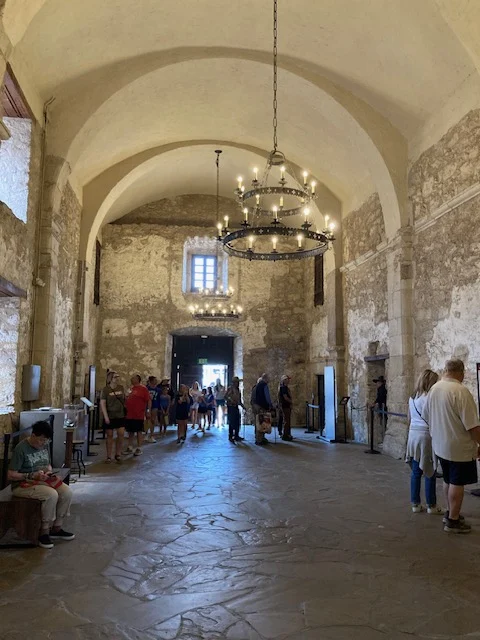
Inside the Alamo. You can see where the roof was added later, and there are divots in the pillars where the military put beams to create a second story.
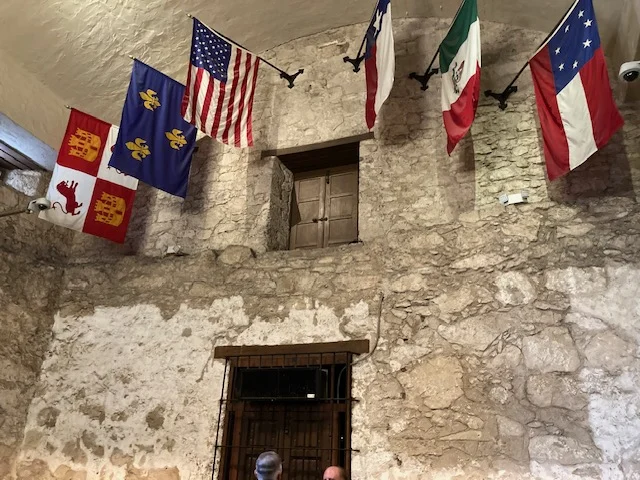
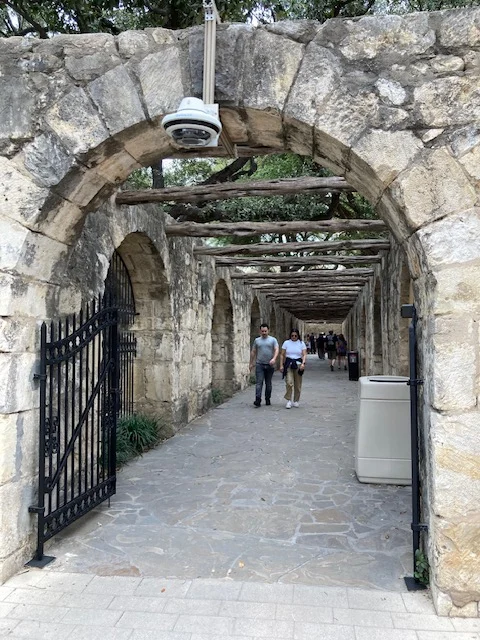
Walkway on the side of the Alamo
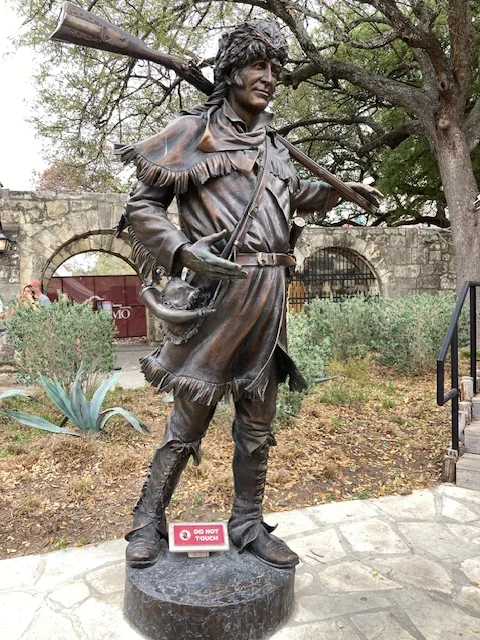
This sculpture of Davy Crockett is one of the pieces of art all over the complex representing different people who were associated with the Alamo. Crockett is one of the most infamous characters of the Alamo for me when I was growing up. He was a politician, serving Tennessee in the US House of Representatives, after which he headed to San Antonio to start a new life adventure. He fought in the Texas Revolution and died at the Alamo.