
Traveling and learning about other places, here and abroad, is fascinating to me. It’s like I am a sponge soaking up the history, the uniqueness and the beauty of my surroundings. I don’t have the capacity to remember it all any more, but I sure do love learning.
I recently had the opportunity to visit Puerto Plata for the first time, and the history around the Dominican Republic and Haiti sharing the same island is something on which I had no information. Working at Feed My Starving Children for several years, I was aware of the border between the two, but not their shared history. I had an opportunity to visit Puerto Plata recently where I learned a lot.
Christopher Columbus claimed the island for Spain in 1492, and the western third was ceded to France in 1697. After a slave revolt on the French side, Haiti became the first black republic in 1804. From 1822-1844 French Haiti ruled over the whole island, and the Dominican Republc gained its independence in 1844.
What is interesting to me is the two independence days, though only one is observed. The first was the independence from Spain, and there are statues in the central town square of men instrumental in both the independence from Spain and the independence from Haiti.
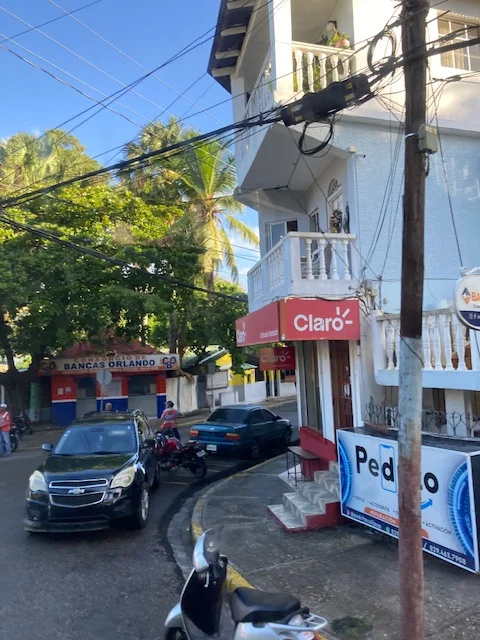
Along with the history, I toured the city through its narrow streets on a large tour bus. Boy was I glad I wasn’t driving! The streets are so narrow turning corners in the bus is a challenge, and our driver did an excellent job. He also parallel parked the bus twice on those streets! He is very skilled at what he does!
We were told the streets are so narrow because they were constructed when the town had a smaller population. The population increased exponentially after cruise ships began stopping at the island in 2015.
The first stop was at a jewelry store that deals specifically in amber and larimar stones. The blue larimar stone is only found in the Dominican Republic and resembles the colors of the Caribbean sea. The stone was first discovered in 1916 by a Spanish missionary, but the stone had no value so a mining permit was denied. Then in 1976, Miguel Mendez learned of the stone and began extracting it. He named it using a blend of his daughter’s name, Larissa, and the Spanish word “mar”, which is sea. It was classified as a semi-precious stone in 1979, and is now the national stone of the Dominican Republic.
We also visited an amber museum where there were examples of insects and plants preserved in amber. My favorite piece fossilized a small fern-like plant.
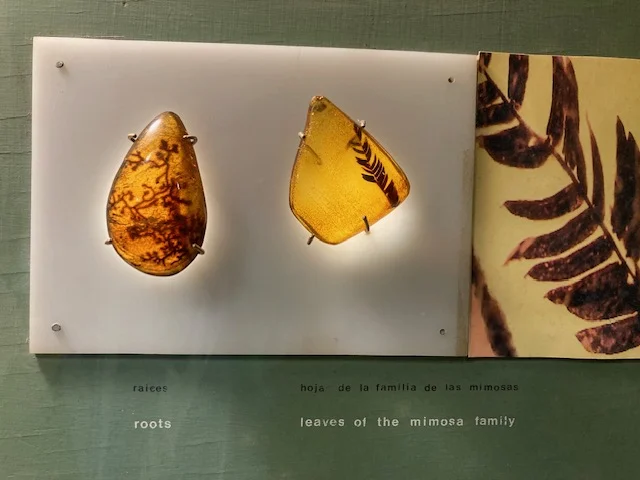
Did you know you can tell the difference between a real piece of amber and a fake one using salt water? Or by using a black light?
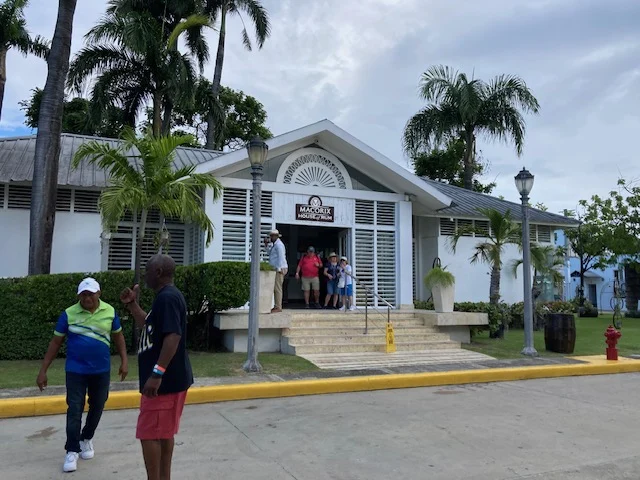
Another place we visited is the Macorix House of Rum where we learned how rum is made, toured the warehouse of barrels where the rum is aging, and had the opportunity to taste several different flavors of rum. Being a lightweight, I only had a couple of sips.
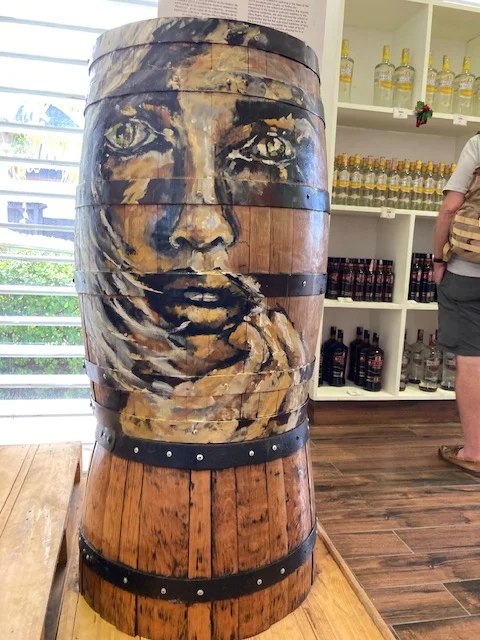
In the showroom/gift shop, there was some really cool art – a dress made out of grain bags, and faces painted on barrels. Beautiful!
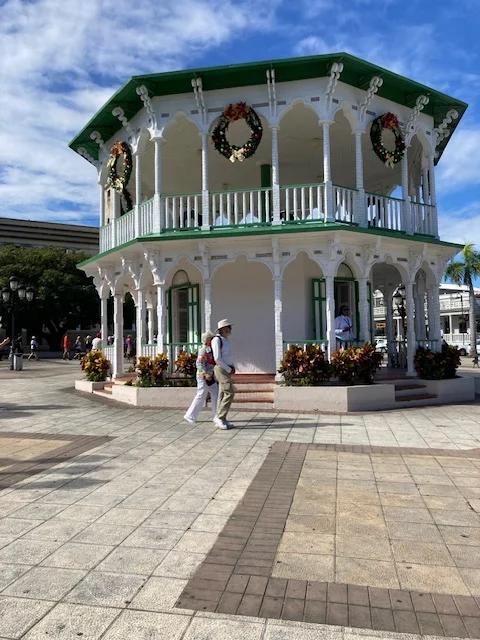
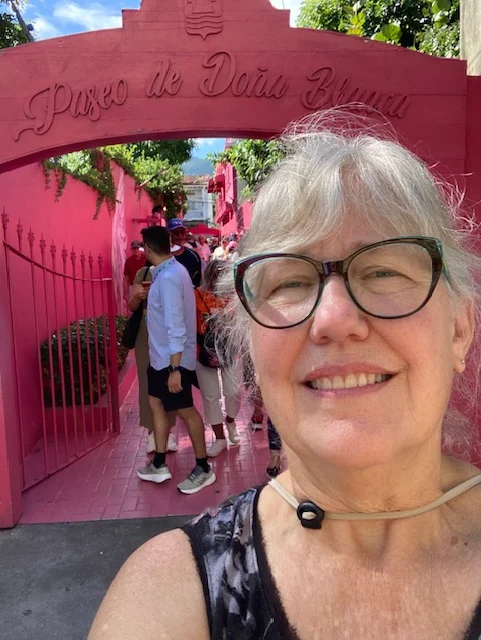
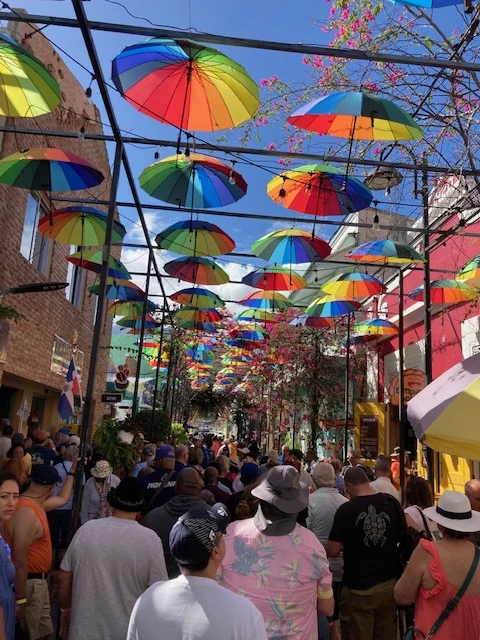
We visited another museum, the central park, which is a town square, a cathedral, the pink street and umbrella lane.
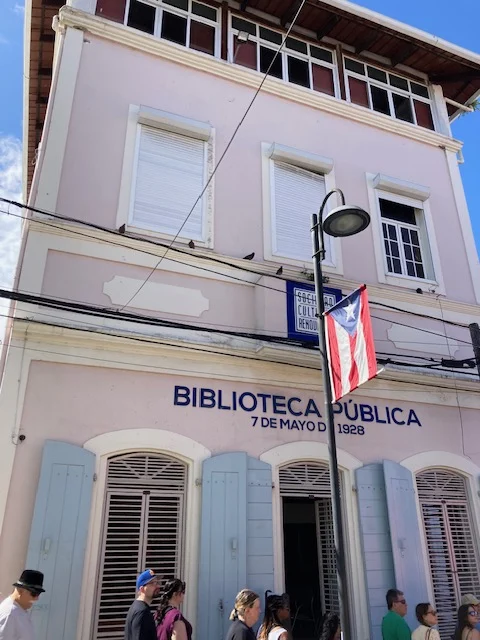
And, of course, I had to take a photo of the library!